JX Apparel Group
JX Apparel Group
Only 6% of 250 major fashion brands name a specific farm or raw-material facility, against 52% that publish a Tier 1 factory list (Fashion Revolution, Fashion Transparency Index 2023).
That gap describes the traceability problem for a wool or cashmere coat in a single line: visibility is strong at the sewing floor and thins out at every step back towards the goat or the sheep. Inside companies the pattern repeats, with only 22% and 19% of companies surveyed by KPMG in 2023 examining supplier activity at Tier 3 and Tier 4. On the fiber side, 28% of the wool used by brands reporting to Textile Exchange could be traced to its country of origin in 2022, and about 46% of China's 2024 cashmere output came from a single region, Inner Mongolia. This analysis aggregates 51 data points from Fashion Revolution's Fashion Transparency Index 2023, Textile Exchange's Materials Market Report 2025, KPMG's 2023 Anti-Forced Labor Survey, China's National Bureau of Statistics, the Aid by Trade Foundation's Annual Report 2025 and more than 20 other primary sources.
For a wool or cashmere coat, the four tiers run from the cut-and-sew factory (Tier 1) to the weaving and finishing mill (Tier 2), then the spinner or top-maker (Tier 3, with scouring and dehairing sometimes counted as a separate stage), and finally the farm or herder (Tier 4). Frameworks number these stages differently, so the first step is to agree the definitions with a supplier before asking for any documents.
Disclosure thins out at every step. Among 250 major brands in the Fashion Transparency Index 2023, the most recent edition with tier data, 52% published a Tier 1 supplier list but only 6% named a specific farm or raw-material facility. KPMG's 2023 survey finds the same shape inside companies: due diligence at 68% of respondents stops at Tier 2.
Brands that report their material use to Textile Exchange are a group that outperforms the wider industry, and even there 80% had no access to raw-material-level traceability information in 2022.
The corporate surveys are cross-industry, not apparel-specific. McKinsey's 2025 pulse covers 100 companies. Achilles' 6% figure for full Tier 2 and Tier 3 visibility comes from 2,805 organisations in construction, energy, manufacturing, transport and the public sector, and is widely reported from Achilles' press release while the full report sits behind a download form. All of these sources show the same pattern, and closing the gap between Tier 1 and Tier 4 is the job of a traceability file.
In 2023, half of major brands named their garment factories; about one in seventeen named a farm.
| Metric | Value | Source |
|---|---|---|
| Major brands publishing a Tier 1 (first-tier manufacturer) supplier list | 52% (129 of 250 brands), up from 32% of 100 brands in the first Index (2017) | Fashion Revolution, Fashion Transparency Index 2023 |
| Major brands publishing some of their processing facilities (spinning, weaving, dyeing, finishing; Tiers 2-3) | 36% of 250 brands in 2023 (24% in 2020) | Fashion Revolution, Fashion Transparency Index 2023 |
| Major brands publishing at least some raw-material suppliers (Tier 4) | 12% of 250 brands (unchanged from 2022) | Fashion Revolution, Fashion Transparency Index 2023 |
| Major brands naming a specific farm or facility where the raw material is produced | 6% of 250 brands | Fashion Revolution, Fashion Transparency Index 2023 |
| Companies whose supplier due diligence covers only Tiers 1 and 2 | 68%; only 22% examine Tier 3 and 19% examine Tier 4 supplier activity (2023, cross-sector) | KPMG, 2023 Anti-Forced Labor Survey |
| Supply chain leaders with visibility into tier-one supplier risks, and the share of those whose visibility reaches tier two or beyond | 95% see tier-one risks; visibility extends to tier two or beyond for 42% of them (2025, 100 companies, cross-industry) | McKinsey & Company, Supply chain risk pulse 2025 |
| Materials Benchmark participants without access to raw-material-level traceability information | 80% (2022 data) | Textile Exchange, Materials Benchmark Report 2023: Brands & Retailers |
| Organisations reporting full visibility into Tier 2 and Tier 3 suppliers (cross-industry, not apparel) | 6%; nearly half report limited or no visibility beyond their immediate supplier base (2,805 organisations) | Achilles, Annual Risk and Sustainability Report 2026 |
The Fashion Transparency Index 2023 is the most recent global Fashion Revolution edition with tier-disclosure data; the 2024 and 2025 editions (What Fuels Fashion?) cover climate disclosure. Earlier-edition values are not substituted for 2023 figures. Materials Benchmark participants outperform the industry, so the wider market is unlikely to do better than their 80%. The Achilles figure is widely reported from the company's press release; the full report is gated. Throughout this article, "Tier 1" to "Tier 4" refers to position in the supply chain.
A cut-and-sew factory holds first-hand evidence for its own tier and for the handover from Tier 2: the bill of materials, fabric purchase contracts and invoices, mill packing lists, inbound fiber-composition test reports, and its own scope certificate where it holds one. Everything further up is pass-through evidence, meaning the mill's scope certificate, the spinner's yarn declaration and the herder or farm certificate.
A garment factory in Jiaxing cannot audit a Mongolian herder. It can collect, check and forward that paperwork, and say plainly when a link is missing. An imported Italian wool fabric is no exception: it is still a Tier 2 document request.
Large buyers hit the same wall. McKinsey's 2025 pulse records a 22-point rise in the share of companies with tier-two visibility, but only 58% have mapped their tier-two suppliers and fewer than half of those are in regular contact with them. QIMA puts full end-to-end visibility at 18%. Owning facilities rarely solves the problem either: only about a quarter of 200 large brands disclose owning manufacturing sites, and 19% processing sites (Fashion Revolution, What Fuels Fashion? 2025).
In worsted cashmere spinning for unlined coats, the spinner is the decisive tier, because the yarn is where the fiber blend and the origin of the dehaired fiber get fixed. The yarn certificate and the spinner's name are the two items to request before an order is placed. Tonnage also changes basis along the chain: 1 kg of raw Mongolian cashmere yields about 525 g once washed and dehaired (VCA4D), which is why greasy and dehaired volumes in certification reports never line up.
Certificates at the factory's own tier need careful reading too. GRS, the targeted certification most often required by brands in the OECD's 2023 survey, covers recycled content: its transaction certificates trace recycled inputs, not virgin wool or cashmere. JX Apparel Group, a Jiaxing outerwear maker founded in 2010, is GRS certified on that basis, which is relevant to a recycled lining or shell and says nothing about where a cashmere face fabric came from. The Tier 1 and Tier 2 facts a factory already holds (where the fabric was made and dyed, where the coat was assembled) are also the France environmental cost label data inputs.
Public registries help confirm that a named facility exists. Open Supply Hub listed 2,521,213 production locations across all sectors as of September 2026, although it gives no breakdown for wool or cashmere mills.
A garment factory can check and forward upstream certificates. It cannot audit a herder.
| Metric | Value | Source |
|---|---|---|
| Companies that have mapped their tier-two suppliers | 58%; fewer than half of these have regular direct contact with those suppliers (2025, cross-industry) | McKinsey & Company, Supply chain risk pulse 2025 |
| Change in the share of companies with visibility into their tier-two suppliers (2025 pulse vs the previous survey) | Up 22 percentage points, reversing several years of declining visibility | McKinsey & Company, Supply chain risk pulse 2025 |
| Businesses with full end-to-end supply chain visibility, and average share of supplier network mapped | 18% have full end-to-end visibility; the average business maps 60% of its supplier network, up from 53% (2025 data) | QIMA, 2026 Global Sourcing Survey |
| Large brands disclosing that they own supply-chain facilities, manufacturing vs processing level | About a quarter at manufacturing level and 19% at processing level; more than half of these report owning no manufacturing or processing facilities | Fashion Revolution, What Fuels Fashion? 2025 |
| Dehaired cashmere yield from raw Mongolian cashmere | About 525 g of dehaired cashmere per 1 kg of raw fiber (washing removes about 30%, dehairing about 25%) | European Commission VCA4D, Mongolia Cashmere Value Chain Analysis (2024) |
| Most commonly required targeted certification among brands and retailers surveyed by the OECD (2023 survey) | Global Recycled Standard (GRS), required by 63% of 32 brands and retailers | OECD, The Role of Sustainability Certifications in Due Diligence in the Garment and Footwear Sector (2025) |
| Production locations listed on Open Supply Hub (all sectors, global) | 2,521,213 locations, from 4,740 contributing organisations, across 225 countries and territories (as of September 2026) | Open Supply Hub, platform counter (September 2026) |
McKinsey gives the 22-point rise but not the new level, and the 58% mapping figure answers a different question from the 42% risk-visibility figure in Section 1. QIMA surveyed over 1,000 businesses across industries. The VCA4D yield describes the Mongolian processing chain and is not a universal conversion factor. GRS covers recycled content only and is not traceability proof for virgin wool or cashmere.
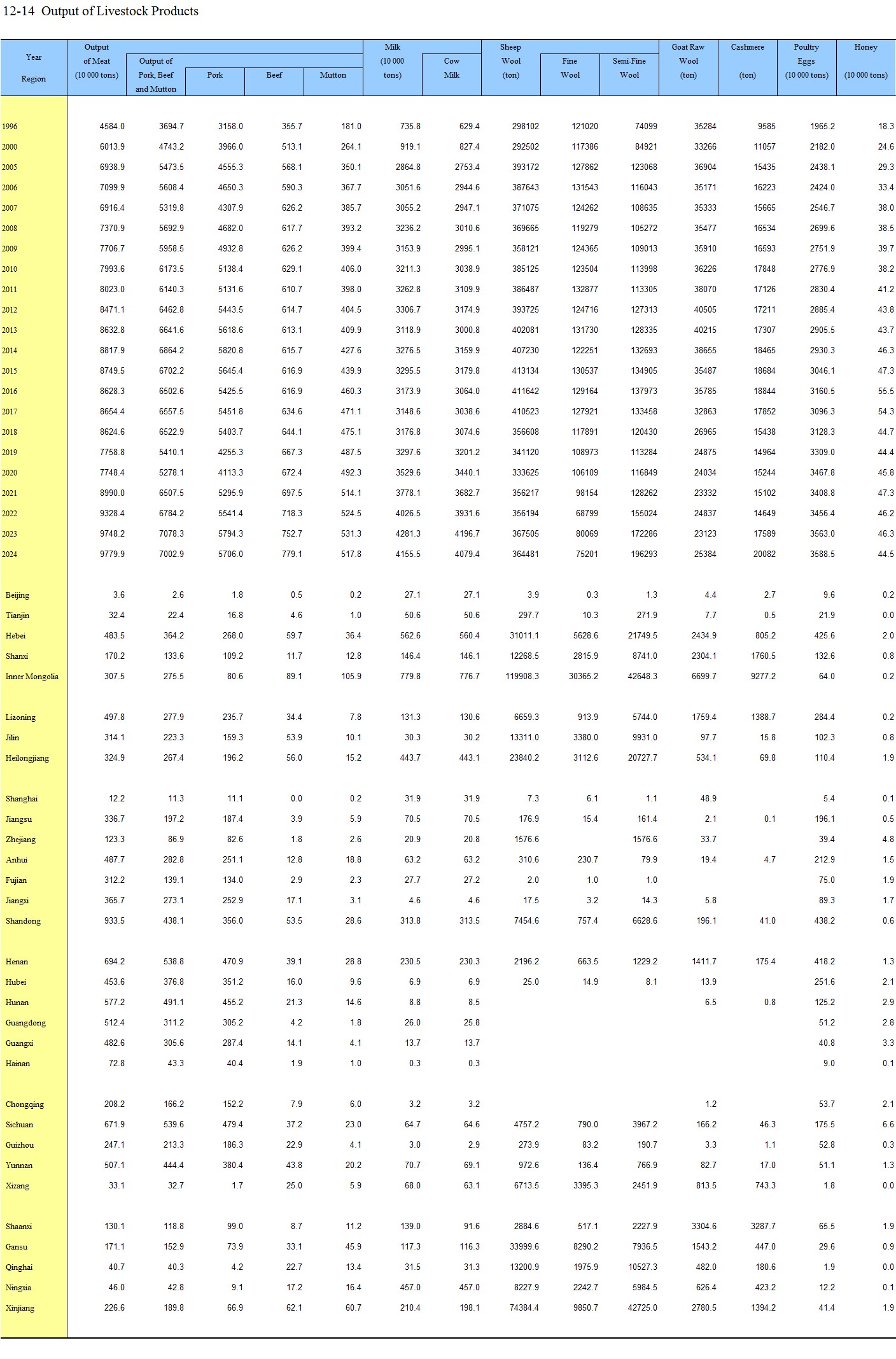
Cashmere origin is concentrated, which makes Tier 4 documentation more manageable than it sounds. Textile Exchange estimates that about 69% of greasy cashmere comes from China, and China's statistics bureau puts about 46% of the country's 2024 output in Inner Mongolia. Mongolia is the other large origin, at 9,672 t of raw cashmere in 2022.
Certified supply is volatile. The four cashmere programmes (AVSF, the Good Cashmere Standard, Responsible Nomads and SFA) together covered 47% of global output in 2023, then 36% in 2024, which Textile Exchange puts down to weak demand and certified fiber not earning a premium. Mongolia's 2023-2024 dzud hit the SFA scheme directly, with SFA-certified volume falling from 1,322 t to 600 t on SFA's own figures.
SFA and the Good Cashmere Standard are two separate schemes run by two separate organisations. SFA's Animal Fibre Standard took effect on 1 April 2025. The Good Cashmere Standard is run by the Aid by Trade Foundation and verifies farms in Inner Mongolia. Their volumes sit on different bases: greasy fiber in Textile Exchange's reporting (2,700 t for GCS in 2024) and dehaired fiber in AbTF's (1,100 t in 2025), so neither figure should be read against the other.
For a brand, the practical Tier 4 request is the scheme name and the certificate covering the herder group or farm, tied to the yarn lot through the Tier 3 declaration. The demand side of the same fiber, including prices and regional markets, is covered in the cashmere market statistics and buyer's guide.
Certified cashmere went from 47% of global output in 2023 to 36% in 2024.
| Metric | Value | Source |
|---|---|---|
| Global greasy cashmere production and China's share | About 25,611 t (an estimate for 2024); about 69% produced in China | Textile Exchange, Materials Market Report 2025 |
| China's national cashmere output and regional split, 2024 | 20,082 t, the highest value in the NBS series (17,589 t in 2023); Inner Mongolia 9,277.2 t (about 46%); Xinjiang 1,394.2 t (about 7%) | National Bureau of Statistics of China, China Statistical Yearbook 2025 |
| Mongolia raw cashmere production and share of global output | 9,672 t of raw cashmere in 2022 (peak about 10,764 t in 2020); Mongolia's share of global output ranged from 26% to 36% over 2016-2022 | European Commission VCA4D, Mongolia Cashmere Value Chain Analysis (2024) |
| Share of global cashmere produced under certification programmes (AVSF, Good Cashmere Standard, Responsible Nomads, SFA) | 36% (9,210 t) in 2024; 47% (about 11,959 t) in 2023; 35% (9,319 t) in 2022 | Textile Exchange, Materials Market Report 2025 |
| Good Cashmere Standard production, greasy-fiber basis (Textile Exchange) | 2,700 t of greasy cashmere from about 2.4 million goats in China in 2024, down from 5,400 t in 2023; about 11% of global cashmere output | Textile Exchange, Materials Market Report 2025 |
| Good Cashmere Standard key results, 2025 (dehaired-fiber basis) | 4,100 GCS-verified farms, about 2 million goats, 1,100 t of dehaired GCS-verified cashmere, 130 supply-chain partners, 12 countries processing GCS cashmere | Aid by Trade Foundation, Annual Report 2025 |
| SFA Animal Fibre Standard publication and effective dates | Published December 2024; effective 1 April 2025; replaced the SFA Cashmere Standard v1.0 (first introduced January 2023); scope still covers cashmere fiber production only | Sustainable Fibre Alliance, SFA Animal Fibre Standard page |
| SFA-certified cashmere volume and goat losses after Mongolia's 2023-2024 dzud | SFA-certified cashmere fell from 1,322 t in 2023 to 600 t in 2024; goat losses of around 20% over the two years (SFA estimates) | Sustainable Fibre Alliance, Climate Disaster Impact on Mongolian Cashmere Supply: 2024 Market Overview |
Textile Exchange's global cashmere total is built partly on IWTO 2023 data used as a 2024 proxy, and its China tonnage matches the NBS 2023 value, so the global estimate and the NBS 2024 national figure are not combined into a new share here. Regional shares are computed from the NBS table; the Xinjiang row is origin data only. The certified share is a volume measure, not a traceability measure, and SFA's 2024 volume inside it uses 2023 data as a proxy. GCS farm counts from earlier releases are not shown as a trend because the sources give no reason for the change.
The Responsible Wool Standard certifies every site from the farm to the seller in the final business-to-business transaction. In practice each link needs two documents: a scope certificate showing the site is certified, and a transaction certificate showing that one specific shipment carried certified content. A transaction certificate proves volume and certified content for that handover. It does not prove fiber quality or the welfare outcome at a named farm.
The certificate rules themselves are changing. Textile Exchange's revised Policy for Scope and Transaction Certificates takes effect on 1 October 2026 and becomes mandatory on 1 April 2027, with a transition period in between, so buyers should check which version a certificate was issued under.
Certified wool is still a thin slice of supply. RWS volume slipped from 4.0% to 3.6% of global greasy wool between 2023 and 2024 even as certified land grew, and all certified wool programmes combined covered about 4.3% in 2024. Under RWS 2.0, supply-chain certification for wool, mohair and alpaca sits in one Responsible Animal Fibers scope, so a spinner's or mill's certificate may show that scope rather than the RWS name.
Demand-side evidence is thin as well. Only 28% of the wool used by brands reporting to Textile Exchange could be traced to its country of origin in 2022, and 28% of the brands and retailers in the OECD's 2023 survey required RWS certification from suppliers. How RWS sits alongside ZQ, GRS and other standards is set out in the reference on wool and natural-fiber certifications for outerwear.
A transaction certificate proves what was shipped, not how the sheep were kept.
| Metric | Value | Source |
|---|---|---|
| Sites that must be certified under the Responsible Wool Standard chain of custody | All sites, from wool farms to the seller in the final business-to-business transaction | Textile Exchange, Responsible Wool Standard programme page |
| Textile Exchange Policy for Scope and Transaction Certificates V4.0: key dates | Published 1 April 2026; effective 1 October 2026; mandatory 1 April 2027 (transition period between the two dates) | Textile Exchange, Policy for Scope and Transaction Certificates V4.0 |
| Supply-chain certification scope for Textile Exchange animal-fiber standards under RWS 2.0 (2024 data) | RWS, Responsible Mohair Standard and Responsible Alpaca Standard supply-chain certification combined into one Responsible Animal Fibers (RAF) scope; strong supply-chain adoption reported in wool-processing countries such as Italy and China | Textile Exchange, Materials Market Report 2025 |
| RWS-certified greasy wool production and share of global output, 2023-2024 | 79,938 t (4.0%) in 2023 to 70,389 t (3.6%) in 2024, even as certified land and farmer numbers rose | Textile Exchange, Materials Market Report 2025 |
| Share of global greasy wool under certified or verified programmes (RWS, ZQ/ZQRX, AWSS schemes, SCWS, Climate Beneficial) | About 4.3% (86,002 t) in 2024, down from about 5.2% (102,663 t) in 2023; about 96% conventional or unknown | Textile Exchange, Materials Market Report 2025 |
| Land certified to the Responsible Wool Standard | Over 30 million hectares (2025) | Textile Exchange, Annual Report 2025 |
| Wool used by Materials Benchmark brands that can be traced to its country of origin | 28% (2022 data) | Textile Exchange, Materials Benchmark Report 2023: Brands & Retailers |
| Brands and retailers surveyed by the OECD that require Responsible Wool Standard certification from suppliers (2023 survey) | 28% of 32 brands and retailers (Responsible Down Standard also 28%) | OECD, The Role of Sustainability Certifications in Due Diligence in the Garment and Footwear Sector (2025) |
Textile Exchange attributes the fall in RWS volume to low wool prices and certified wool not being rewarded by the market. The certified-programme total removes double certification, so per-programme shares should not be added together. The two RWS and Responsible Down Standard figures in the OECD survey are 28% each, not combined, and no cashmere standard appears in that ranking.
Documents show that certified material changed hands; testing checks whether the fiber matches the claim. The public record on isotope origin testing is almost entirely about cotton, and it sits inside UFLPA enforcement that has stopped 43,712 import lines worth $4.12B across all sectors since June 2022. CBP's Isotopic Testing Guidance is written for cotton, and no ISO or ASTM standard method for isotopic origin testing exists, so each provider uses its own method and CBP treats a result as evidence rather than proof.
The best-known results are cotton results too. CBP test records obtained by Reuters showed 10 of 37 garments tested in May 2023 were consistent with Xinjiang cotton. That figure was widely reported by Just Style, Sourcing Journal and Quartz but is not readable in CBP's own documents, and brand names were redacted. Oritain, the best-known commercial provider, says it works with more than 1,800 companies but publishes no wool or cashmere test outcomes. None of these figures is specific to wool or cashmere, and none should be read across to them.
For cashmere, the everyday risk is content as much as origin. CCMI estimates raw cashmere output at about 1% of sheep's wool for apparel and warns of garments hang-tagged "Cashmere" or "Cashmere blend" that contain 10% or less. An independent fiber-composition test commissioned by the brand is the practical check. JX Apparel Group accepts third-party inspection by SGS, Bureau Veritas and Intertek; a composition test is a separate laboratory service, most useful when it is drawn from the bulk lot rather than the approved sample.
Isotope testing has no ISO or ASTM standard method, and its public track record is cotton.
| Metric | Value | Source |
|---|---|---|
| CBP laboratories being enhanced for isotopic origin testing (cotton) | 3 laboratories; CBP states it does not have the capacity to test all US imports | U.S. CBP, Isotopic Testing Guidance (Publication 3869-1024) |
| Standard method for isotopic origin testing (CBP cotton guidance) | None: no ISO or ASTM standard method exists; CBP says isotopic testing alone cannot be used to clear shipments | U.S. CBP, Isotopic Testing Guidance (Publication 3869-1024) |
| Garments CBP isotope-tested as consistent with Xinjiang cotton (cotton) | 10 of 37 garments (about 27%) in May 2023; 13 of 86 tests (15%) across the December 2022, April 2023 and May 2023 batches | U.S. CBP isotopic test records (FOIA), as reported by Reuters (2023) |
| Retailers, brands, manufacturers and suppliers Oritain says it works with (vendor claim) | More than 1,800 | Oritain, company homepage (2026) |
| Shipment lines stopped under UFLPA across all sectors, June 2022 to 13 August 2026 (not fiber-specific) | 43,712 shipment lines (26,485 denied, 15,293 released), valued at $4.12B | U.S. CBP, UFLPA Enforcement Statistics Dashboard (data as of 13 Aug 2026) |
| Raw cashmere production relative to sheep's wool for apparel (CCMI estimate) | About 1% | CCMI, Cashmere Mislabelling & Fraud page |
| Cashmere content in some garments hang-tagged "Cashmere" or "Cashmere blend" (a pattern CCMI warns about) | 10% or less | CCMI, Cashmere Mislabelling & Fraud page |
The CBP isotope guidance and the Reuters test results concern cotton only; the guidance does not mention wool or cashmere. The UFLPA dashboard total covers all sectors, and CBP's 2026 revision counts import lines rather than shipments, so older shipment counts are not comparable; "stopped" does not always mean physically detained. Oritain's customer count is self-reported. CCMI's page is undated, and its "10% or less" figure describes a pattern of mislabelling, not a measured failure rate.
None of these regimes yet imposes a general Tier 3 or Tier 4 disclosure mandate on outerwear. What they change is how much evidence a claim or an import needs. Directive (EU) 2024/825 (ECGT) applies from 27 September 2026 and bans generic environmental claims without recognised excellent environmental performance, as well as sustainability labels not based on a certification scheme or set by a public authority. A "responsibly sourced cashmere" claim therefore needs a file behind it; the ECGT green-claims rules for outerwear are covered in detail separately.
The textile Digital Product Passport is expected, not in force: the ESPR Working Plan gives textiles an indicative 2027 adoption date, and no textile delegated act had been adopted by late August 2026. France's environmental cost label is voluntary, as reported by Intertek and other compliance publications, and the separate Green Claims Directive proposal has been stalled since June 2025.
In the US, CBP has stopped 13,260 apparel, footwear and textile shipment lines under UFLPA since June 2022, in a category where the documented risk is overwhelmingly cotton.
No rule yet demands a Tier 4 disclosure. ECGT makes an unsupported sourcing claim a liability.
| Metric | Value | Source |
|---|---|---|
| Application date of Directive (EU) 2024/825 (Empowering Consumers for the Green Transition) | Applies from 27 September 2026 (Member State transposition deadline: 27 March 2026) | EUR-Lex, Directive (EU) 2024/825 (ECGT) |
| ECGT additions to the EU list of prohibited commercial practices most relevant to fiber claims | Sustainability labels not based on a certification scheme or established by public authorities (Annex I point 2a); generic environmental claims without recognised excellent environmental performance (Annex I point 4a) | EUR-Lex, Directive (EU) 2024/825 (ECGT) |
| Textiles delegated act under ESPR (the route to a textile Digital Product Passport) | Textiles named a priority product group, with 2027 as the indicative adoption year: a planning target, not an adopted act | EUR-Lex, ESPR Working Plan 2025-2030, COM(2025) 187 |
| Status of France's environmental cost label for textiles (Decree No. 2025-957) | Voluntary; display possible since 1 October 2025, with no mandatory date set | French Decree No. 2025-957 on textile environmental cost, as reported by Intertek |
| Apparel, footwear and textile shipment lines stopped under UFLPA, June 2022 to 13 August 2026 (all fibers) | 13,260 shipment lines (9,005 denied, 3,913 released), valued at about $0.10B | U.S. CBP, UFLPA Enforcement Statistics Dashboard (data as of 13 Aug 2026) |
ECGT does not require Tier 3 or Tier 4 disclosure; a traceability file is evidence for substantiating a claim, not a response to a disclosure mandate. Once a textile delegated act is adopted, application would follow by at least 18 months, and any proposed passport data fields are not yet law. The French label's status rests on consistent reporting by Intertek and other compliance publications rather than a fresh reading of the decree text. Green Claims Directive status follows the European Parliament Legislative Train (updated 1 August 2026). Nothing in the UFLPA apparel category is wool- or cashmere-specific.
Certificates are already the main traceability tool buyers use. In the OECD's 2023 survey, 81% of 32 brands and retailers required sustainability certifications from suppliers, 81% named tracing products as a reason, and 56% expected to require more certifications in the coming years. Smaller labels lag: 91% of large brands required certifications, against 6 of 10 small and medium-sized ones, and 62% of certificate users called the complexity a significant challenge.
The certified base is widening. Textile Exchange counted over 100,000 sites certified to its standards in 2025, with growth concentrated in recycled standards, and the Good Cashmere Standard reported 71 brand and retailer partners from 13 countries. Brands reporting to Textile Exchange's benchmark raised the share of raw materials under sustainability programmes from 58% in 2023 to 67% in 2024, although those reporters far outperform the industry as a whole.
A certificate only counts if it matches the shipment. Treat these as red flags:
A complete file now also prepares a brand for the textile Digital Product Passport, which is expected to call for supply-chain data once its delegated act is adopted; the Digital Product Passport timeline for coats tracks where that process stands.
Questions to ask a coat manufacturer before ordering follow from that list:
A factory's own quality control answers a different question. At JX Apparel Group, a 5-stage inline QC process runs from first-piece sign-off to a final inspection of dimensions, appearance and construction. That process confirms how the coat was made. It does not establish where the fiber came from, which stays a matter of documents and laboratory tests.
A scope certificate without a transaction certificate for the shipment proves nothing about the coat.
| Document | Issuing tier | What it proves | Typical gap |
|---|---|---|---|
| BOM and fabric invoices | Tier 1 (garment factory) | What was bought, in what quantity | No mill name |
| Mill scope certificate | Tier 2 (weaving and finishing mill) | The site is certified | No link to a specific shipment |
| Transaction certificate | Issuing certification body | Certified content in one shipment | Issued for a different order or volume |
| Yarn declaration and spinner name | Tier 3 (spinner or top-maker) | Fiber blend and fiber source | Missing for worsted cashmere |
| Herder or farm certificate | Tier 4 (farm or herder group) | Farm-level scheme membership | Expired, or not in the public database |
| Fiber-composition test | Independent laboratory | Actual fiber content | Not tied to the bulk lot |
| Metric | Value | Source |
|---|---|---|
| Brands and retailers surveyed by the OECD that require sustainability certifications from suppliers (2023 survey) | 81% of 32 brands and retailers (about 26 companies) | OECD, The Role of Sustainability Certifications in Due Diligence in the Garment and Footwear Sector (2025) |
| Share requiring supplier certifications: large brands (over EUR 50M turnover) vs small and medium-sized brands (2023 survey) | 91% of large brands (20 of 22) vs 60% of small and medium-sized brands (6 of 10) | OECD, The Role of Sustainability Certifications in Due Diligence in the Garment and Footwear Sector (2025) |
| Top reasons brands and retailers surveyed by the OECD require certifications (2023 survey) | Risk identification 92%; tracing products 81%; reputational reasons 76% | OECD, The Role of Sustainability Certifications in Due Diligence in the Garment and Footwear Sector (2025) |
| Brands requiring certifications that call certification complexity a significant challenge; brands using certifications to select suppliers (2023 survey) | 62% cite complexity as a significant challenge; 73% use certifications as a criterion for selecting new suppliers and materials | OECD, The Role of Sustainability Certifications in Due Diligence in the Garment and Footwear Sector (2025) |
| Brands and retailers surveyed by the OECD that expect to require more certifications from suppliers in the coming years (2023 survey) | 56%; only 9% expect to require fewer | OECD, The Role of Sustainability Certifications in Due Diligence in the Garment and Footwear Sector (2025) |
| Share of raw materials under sustainability programmes among brands reporting to Textile Exchange's Materials Benchmark (2023 and 2024 data) | 58% in 2023 to 67% in 2024; a record 423 brands and retailers reported in 2025, up from 57 in 2015 | Textile Exchange, Materials Benchmark Insights and Trends 2025 |
| Good Cashmere Standard brand and retailer partners, 2025 | 71 partners from 13 countries, up more than 20% year on year | Aid by Trade Foundation, Annual Report 2025 |
| Sites certified to Textile Exchange standards worldwide | Over 100,000 sites in 2025; 12% year-on-year growth across current standards (preliminary) | Textile Exchange, Annual Report 2025 |
The OECD survey was fielded from 17 August to 10 October 2023 with 32 brand and retailer respondents; its subgroups are very small, and reasons allowed multiple answers. The 62% complexity figure is a share of brands that require certifications, while the 73% supplier-selection figure is a share of all 32 respondents. The 67% Materials Benchmark share applies to reporting brands only and is not an industry-wide figure. The Textile Exchange site count covers all of its standards and is not a wool or cashmere count. The GCS partner count covers brands and retailers only, separate from the 130 supply-chain partners in Section 3. The document checklist is an editorial summary, not a statistic.
| Metric | Value | Source |
|---|---|---|
| Major brands publishing at least some raw-material suppliers (Tier 4) | 12% of 250 brands (unchanged from 2022) | Fashion Revolution, Fashion Transparency Index 2023 |
| Companies whose supplier due diligence covers only Tiers 1 and 2 | 68%; only 22% examine Tier 3 and 19% examine Tier 4 supplier activity (2023, cross-sector) | KPMG, 2023 Anti-Forced Labor Survey |
| Supply chain leaders seeing tier-one risks, and those whose visibility reaches tier two or beyond | 95% see tier-one risks; 42% of them see tier two or beyond (2025, 100 companies) | McKinsey & Company, Supply chain risk pulse 2025 |
| Materials Benchmark participants without raw-material-level traceability information | 80% (2022 data) | Textile Exchange, Materials Benchmark Report 2023: Brands & Retailers |
| Businesses with full end-to-end supply chain visibility | 18%; average business maps 60% of its supplier network, up from 53% (2025 data) | QIMA, 2026 Global Sourcing Survey |
| Dehaired cashmere yield from raw Mongolian cashmere | About 525 g per 1 kg of raw fiber | European Commission VCA4D, Mongolia Cashmere Value Chain Analysis (2024) |
| China's national cashmere output and regional split, 2024 | 20,082 t; Inner Mongolia 9,277.2 t (about 46%); Xinjiang 1,394.2 t (about 7%) | National Bureau of Statistics of China, China Statistical Yearbook 2025 |
| Good Cashmere Standard key results, 2025 (dehaired basis) | 4,100 verified farms, about 2 million goats, 1,100 t dehaired, 130 supply-chain partners, 12 processing countries | Aid by Trade Foundation, Annual Report 2025 |
| SFA-certified cashmere after Mongolia's 2023-2024 dzud | 1,322 t in 2023 to 600 t in 2024; goat losses of around 20% (SFA estimates) | Sustainable Fibre Alliance, Climate Disaster Impact on Mongolian Cashmere Supply: 2024 Market Overview |
| Textile Exchange Policy for Scope and Transaction Certificates V4.0 | Effective 1 October 2026; mandatory 1 April 2027 | Textile Exchange, Policy for Scope and Transaction Certificates V4.0 |
| Wool used by Materials Benchmark brands traceable to country of origin | 28% (2022 data) | Textile Exchange, Materials Benchmark Report 2023: Brands & Retailers |
| Standard method for isotopic origin testing (CBP cotton guidance) | None: no ISO or ASTM method; isotopic testing alone cannot clear shipments | U.S. CBP, Isotopic Testing Guidance (Publication 3869-1024) |
| Raw cashmere production relative to sheep's wool for apparel | About 1% (CCMI estimate) | CCMI, Cashmere Mislabelling & Fraud page |
| Shipment lines stopped under UFLPA, all sectors, June 2022 to 13 August 2026 | 43,712 lines (26,485 denied, 15,293 released), valued at $4.12B | U.S. CBP, UFLPA Enforcement Statistics Dashboard (data as of 13 Aug 2026) |
| Directive (EU) 2024/825 (ECGT) application date | Applies from 27 September 2026 (transposition deadline 27 March 2026) | EUR-Lex, Directive (EU) 2024/825 (ECGT) |
| Apparel, footwear and textile shipment lines stopped under UFLPA, June 2022 to 13 August 2026 (all fibers) | 13,260 lines (9,005 denied, 3,913 released), valued at about $0.10B | U.S. CBP, UFLPA Enforcement Statistics Dashboard (data as of 13 Aug 2026) |
| Share requiring supplier certifications: large vs small and medium-sized brands (2023 survey) | 91% of large brands (20 of 22) vs 60% of small and medium-sized brands (6 of 10) | OECD, The Role of Sustainability Certifications in Due Diligence in the Garment and Footwear Sector (2025) |
| Raw materials under sustainability programmes among Materials Benchmark reporters | 58% in 2023 to 67% in 2024; 423 brands and retailers reported in 2025 | Textile Exchange, Materials Benchmark Insights and Trends 2025 |
Every figure in this reference was checked against the document that first published it: report PDFs, statistical yearbook tables, standards documents, official dashboards and legal texts, not search summaries. Five research batches produced 83 candidate figures; verification corrected more than a dozen values, years or attributions and dropped 8 that could not be confirmed or were contradicted by a primary source. Of the 51 figures kept, 48 were read in the primary source and 3 rest on consistent reporting across three or more independent publications, each flagged in the text. Survey figures from KPMG, McKinsey, QIMA and Achilles are cross-industry, and the OECD survey covers 32 brands and retailers, so they are worded as survey results rather than market-wide shares. All isotope-testing and UFLPA figures relate to cotton or to all apparel and textiles; none is extended to wool or cashmere.
Primary sources (read in the originating document)
Figures resting on consistent reporting across three or more publications (flagged in the text)
Regulatory status references used in commentary
Last updated: September 2026. Reviewed quarterly. The Fashion Transparency Index 2023 is the most recent global edition with tier-disclosure data. The Materials Benchmark Report 2023 was published in December 2023 with 2022 data, the latest available for its 80% and 28% figures. KPMG's survey is 2023 data. Every OECD figure comes from a survey fielded in August to October 2023, although the paper was published in February 2025. The Reuters-reported CBP tests cover December 2022 to May 2023 and concern cotton only. CCMI's page is undated. Textile Exchange's Materials Market Report 2025 mostly reports 2024 data, with IWTO 2023 data standing in for the 2024 global cashmere total and 2023 data for SFA's 2024 volume. Mongolia's 9,672 t is 2022 data, the latest in the VCA4D analysis. Both UFLPA figures are data as of 13 August 2026 on CBP's revised line-count basis. Open Supply Hub figures are a live counter read in September 2026. McKinsey's pulse sits at an unversioned URL and is re-checked at each update. ECGT wording in this reference will be revised once the directive's 27 September 2026 application date has passed, and the status of the ESPR textile delegated act, not adopted as of 30 August 2026, is re-checked at each update.
Written by
Ray Wang
Women's outerwear manufacturing specialist with 13 years of experience producing wool, cashmere, and down coats for fashion brands across Europe and North America at JX Apparel Group in Jiaxing, China.
Ready to Source?
20+ years of team experience in mid-to-high-end women's coats and jackets. Low MOQ from 200 pcs. Cashmere, wool, silk capabilities.
Get in Touch →