JX Apparel Group
Compliance
France Environmental Cost (Eco-Score) Statistics (2026): 52+ Data Points on Ecobalyse Scoring, Factory Documentation, and Compliance Deadlines for Coat Brands
By Ray Wang·June 4, 2026·11 min read
October 1, 2026 is when third parties — including NGOs and media — may publish France environmental cost scores for your brand's coats without your approval, whether you are ready or not.
France's Ecobalyse system is not a future obligation. Decree No. 2025-957 entered into force on October 1, 2025, and the submission portal launched two weeks later. By December 2025, 42 brands had registered 15,443 products — a fraction of the French market. Brands sourcing coats from China factories are fully in scope, and the six data points that determine a compliant score must come from the factory, not the brand.
From October 1, 2026, any NGO, media outlet, or competitor can publish an Ecobalyse environmental cost score for your brand's coats on the French market — without your knowledge or approval — using conservative default assumptions if you have not submitted your own factory data.
Key Takeaways
- October 1, 2025 was when Decree No. 2025-957 entered into force — France's environmental cost system is already live, covering all producers, importers, and distributors selling textiles in France regardless of origin (French Government, Decree No. 2025-957)
- October 1, 2026 is the third-party publishing date — after this, NGOs, media, and third parties may publish Ecobalyse environmental cost scores for your products without brand approval (French Government, Decree No. 2025-957)
- Voluntary (no mandatory date) — the final Decree No. 2025-957 removed the mandatory implementation deadline from earlier drafts; brands participate voluntarily for now, but third-party publication still proceeds from October 2026 (Carbonfact)
- 6 mandatory parameters are required from the factory for a compliant Ecobalyse score: product mass, material composition + origin country, dyeing/finishing country, fabric production country, manufacturing/assembly country, and product category (Ecobalyse regulatory guidance)
- 16 environmental indicators plus 2 additional criteria (microfiber release and export outside EU) are scored in the Ecobalyse LCA framework — climate change and freshwater ecotoxicity are each weighted at 21.06%, the two dominant factors for coat manufacturing (Intertek)
- India is the default production country when a brand fails to provide actual factory location data — Ecobalyse also defaults to 100% air transport and 100k product range, all of which penalize scores significantly (Peftrust / Ecobalyse documentation)
- Over 60% of all products registered on the Ecobalyse portal were declared through the Fairly Made platform by December 2025 — platform-mediated compliance is the dominant adoption path (Fairly Made, 2025)
- GRS and GOTS are not direct Ecobalyse inputs — certification names are not entered into Ecobalyse; instead, the environmental benefits of recycled and organic fibers are captured through LCA modeling via the Circular Footprint Formula (Carbonfact)
- €15,000 is the maximum fine for legal entities under the AGEC law's Code de la Consommation penalty provisions for environmental cost non-compliance; natural persons face up to €3,000 (Fairly Made)
- Ecobalyse and EU PEF (PEFCR) are being aligned — the France methodology was built from PEF (Product Environmental Footprint) and received European Commission approval on May 15, 2025; cross-EU compliance pathways are converging (Worldly)
1. AGEC Law and the Ecobalyse Platform: What the System Is and Who It Covers
France's environmental cost system entered force on October 1, 2025 under Decree No. 2025-957 — less than a year before the third-party publishing trigger. The system applies to all producers, importers, and distributors selling in France regardless of where the product is made. Chinese outerwear factories exporting to French-market brands are fully within scope for their brand customers' obligations. The Ecobalyse portal launched September 15, 2025, and within three months had 42 brands representing 15,443 products. That relatively low adoption — fewer than 400 products per brand on average — means most of the market has not yet registered, creating both competitive opportunity and exposure risk for brands whose peers declare early.
JX Apparel Group's certifications page details the documentation available from the factory, including BSCI certification and GRS status — both relevant to Ecobalyse data gathering for coat brands.
| Metric | Value | Source |
|---|---|---|
| Date France's environmental cost system entered into force | October 1, 2025 | French Government, Decree No. 2025-957 |
| Date third parties may publish environmental cost scores without brand approval | October 1, 2026 | French Government, Decree No. 2025-957 |
| Date the official Ecobalyse submission portal launched | September 15, 2025 | French Ministry of Ecological Transition |
| Number of products submitted to Ecobalyse portal by December 2025 | 15,443 products | Ecobalyse official portal stats |
| Number of brands registered in Ecobalyse portal by December 2025 | 42 brands | Ecobalyse official portal stats |
| Share of Ecobalyse-registered products declared through Fairly Made platform | Over 60% | Fairly Made, 2025 |
| Number of product categories covered (coats/jackets included) | 11 categories | French Government, Decree No. 2025-957 |
| Minimum textile content threshold to be in scope | At least 80% textile materials | French Government, Decree No. 2025-957 |
The system covers "all producers, importers, and distributors selling in France regardless of origin" — Chinese factories supplying European brands are within scope for their brand customers' obligations.
2. What Ecobalyse Measures: 16 Environmental Indicators and How Coats Score
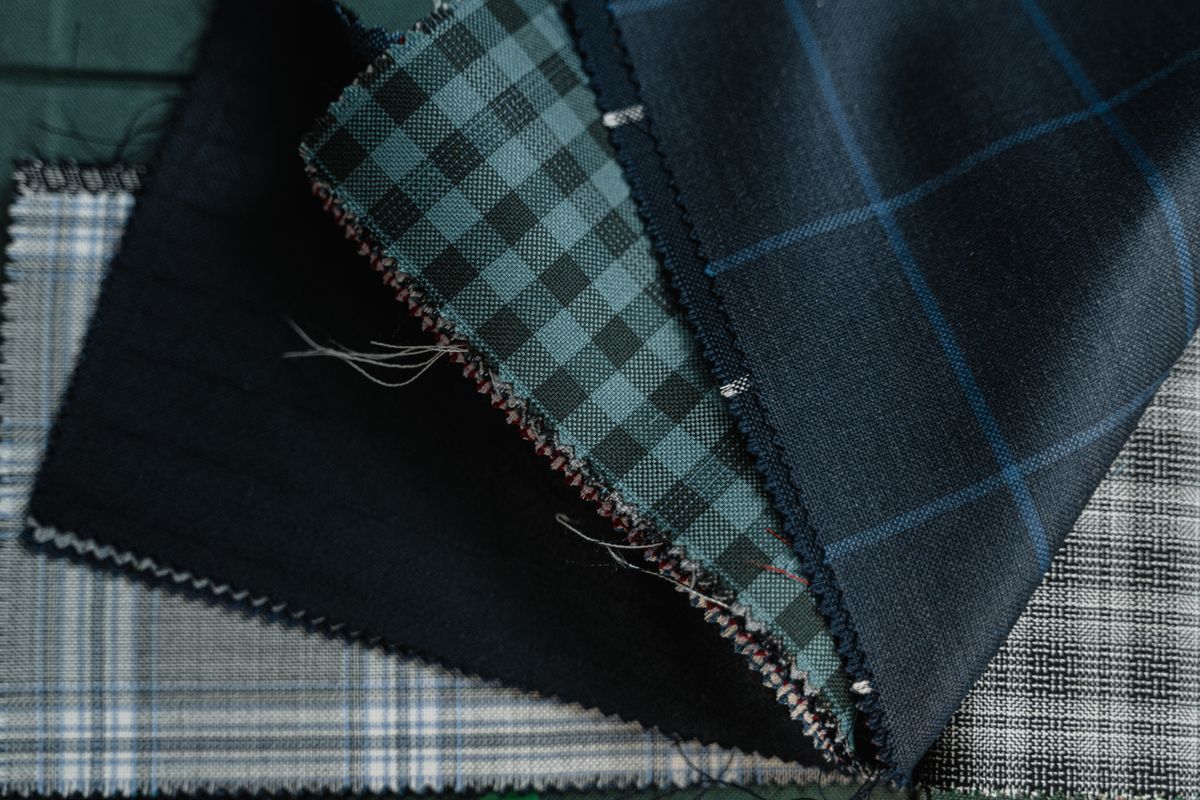
The Ecobalyse scoring framework is a full lifecycle assessment (LCA) spanning spinning, weaving, dyeing, assembly, transport, distribution, use, and end-of-life. For outerwear brands, two indicators dominate: climate change (CO₂ emissions, 21.06% weight) and freshwater ecotoxicity (chemical discharge from dyeing and finishing, 21.06% weight). Together they account for over 42% of the total environmental score, meaning the decisions a China coat factory makes about its dyeing and finishing processes are among the most consequential factory-side variables. The durability coefficient — ranging from 0.67 for ultra-fast-fashion to 1.45 for high-durability brands — can swing the final score by up to 45%, making brand-level decisions about product range breadth and repair services as impactful as material choices.
| Metric | Value | Source |
|---|---|---|
| Number of environmental indicators in Ecobalyse score | 16 indicators (plus 2 additional: microfiber release and export outside EU) | French Government / ADEME, via Intertek |
| Weight of climate change indicator | 21.06% | French Government / ADEME, via Carbonfact |
| Weight of freshwater ecotoxicity indicator | 21.06% | French Government / ADEME, via Carbonfact |
| Water resource use indicator weight | 6.74% | French Government / ADEME, via Carbonfact |
| Ecobalyse durability coefficient range | 0.67 (ultra-fast-fashion) to 1.45 (high durability) | French Government / ADEME, via Traceforgood |
| Maximum score variation from durability criteria | Up to 45% | Vaayu, French Eco-Score Explained 2025 |
| Definition of one Ecobalyse environmental point | One millionth of the average annual environmental impact of an EU citizen | French Government / ADEME, via Carbonfact |
Score examples from Le Monde's own Ecobalyse analysis: France-made jean 1,125 pts; fast-fashion jean 4,435 pts. Coat scores will vary substantially depending on fiber, factory location, and durability rating — outerwear typically scores higher due to heavier construction.
3. What a China Coat Factory Must Provide: The 6 Mandatory Data Points
A compliant Ecobalyse score declaration requires six mandatory data points — all of which must come from the factory, not the brand. Product mass and material composition are typically available on tech packs, but the country-level production data (where fibers were spun, fabric was woven or knitted, dyeing and finishing took place, and garments were assembled) requires documented supply chain traceability that many brands have never formally captured from their factory partners. The compliance condition is binary: all six mandatory points must be covered with primary data, or the score is non-compliant regardless of how many optional parameters are provided. Brands without factory cooperation are forced onto conservative defaults, which produce scores 25–40% worse than actual data would yield.
JX Apparel Group's services include full traceability documentation for fiber origin, fabric production location, and dyeing/finishing country — all required for a compliant score declaration.
| Metric | Value | Source |
|---|---|---|
| Number of mandatory parameters for a compliant Ecobalyse score | 6 mandatory parameters | Ecobalyse regulatory guidance (official PDF) |
| Number of optional parameters to improve score | 10 optional parameters | Ecobalyse regulatory guidance |
| Mandatory parameter 1 | Product mass (kg, minimum 0.01 kg) | Ecobalyse methodology guidance, via Traceforgood |
| Mandatory parameter 2 | Fiber type, blend percentages, and sourcing country (ISO 2-letter codes) | Ecobalyse methodology guidance, via Traceforgood |
| Mandatory parameter 5 | Country where garment is assembled | Ecobalyse methodology guidance, via Traceforgood |
| Compliance condition | Score is only compliant if brand delivers primary data for all 6 mandatory parameters | Peftrust / Ecobalyse |
| Score penalty from using conservative defaults vs. actual supplier data | 25% to 40% worse scores | Greenstitch / Trustrace |
| Data quality indicator | Shows share of supplier-specific vs. modelled/default data — higher quality = more accurate declaration | Peftrust / Ecobalyse |
4. How Factory Location Data Affects the Ecobalyse Score
Every production step is geocoded in Ecobalyse: where yarn is spun, fabric is woven or knitted, dyeing and finishing take place, and final garment assembly occurs. Each location feeds into the energy mix, water treatment assumptions, and transport footprint embedded in the LCA model. When a brand omits location data, Ecobalyse defaults to India — a conservative proxy that does not reflect the actual performance of a Chinese factory. The air transport ratio is an optional parameter (0 to 1 scale) that can substantially improve scores for brands using sea freight, since the default assumes 100% air shipping. For China-sourcing brands shipping by sea to Europe, providing this single optional data point can meaningfully close the gap to the default-penalized score.
| Metric | Value | Source |
|---|---|---|
| Mandatory parameter 3 | Country where dyeing and finishing takes place (ISO code required) | Ecobalyse methodology guidance, via Traceforgood |
| Mandatory parameter 4 | Country where weaving or knitting takes place | Ecobalyse methodology guidance, via Traceforgood |
| Default country when manufacturing location not provided | India (conservative default) | Peftrust / Ecobalyse |
| Other conservative defaults applied when brand data is missing | 100k product range (ultra-wide fast fashion), 100% air transport, lowest durability rating | Peftrust / Ecobalyse |
| Optional parameter: air transport ratio | 0 to 1 scale; sea shipping reduces transport footprint vs. 100% air default | Ecobalyse methodology guidance, via Traceforgood |
| Life cycle stages modeled in Ecobalyse for a coat | Spinning → weaving → dyeing/finishing → assembly → transport → distribution → use → end-of-life | Ecobalyse LCA methodology, via Traceforgood |
The Ecobalyse LCA model distinguishes between where yarn is spun, where fabric is made, where finishing occurs, and where garments are assembled — all four may be different countries within a single China-based supply chain.
5. Certifications That Improve the Score: OEKO-TEX, GRS, RWS, and the Bonus-Malus System
Certifications improve the Ecobalyse score indirectly rather than directly — no certification label is entered as a parameter. What matters is what the certification represents at the fiber and process level. GRS-certified recycled content improves the score through the Circular Footprint Formula, which models the reduced environmental impact of recycled versus virgin feedstocks. OEKO-TEX Standard 100's testing of over 1,000 harmful substances directly feeds into the freshwater ecotoxicity indicator (21.06% weight), one of the two highest-weighted criteria. The most impactful maluses — hazardous chemicals, poor recyclability, and microfiber pollution — are directly addressable through factory process improvements and certification adoption, giving China factories a concrete path to score improvement beyond location data.
JX Apparel Group's certifications page presents the current buyer documentation set: BSCI for factory social compliance, plus GRS and OCS scope certificates for eligible material claims.
| Metric | Value | Source |
|---|---|---|
| Whether GRS/GOTS certification is a direct Ecobalyse input | Not a direct input — benefits captured through LCA of recycled/organic fiber properties via Circular Footprint Formula | Carbonfact, Ecobalyse methodology 2025 |
| How recycled cotton vs. recycled polyester affects score | Recycled cotton typically improves score; recycled polyester may not due to additional processing required | Carbonfact, Ecobalyse methodology 2025 |
| Ecobalyse bonus-malus system — what earns bonuses | Organic materials, eco-design, durability | French Government / ADEME, via Carbonfact |
| Ecobalyse bonus-malus system — what earns maluses | Hazardous chemicals, poor recyclability, microfiber pollution | French Government / ADEME, via Carbonfact |
| Relevance of OEKO-TEX Standard 100 to Ecobalyse | Chemical-compliant production (1,000+ substances) feeds into the 21.06%-weighted ecotoxicity calculation | OEKO-TEX / French Government |
| Repair service requirement for Ecobalyse durability bonus | Must be labeled by Refashion (France's textile eco-organization) | French Government / Refashion, via Carbonfact |
| Number of substances tested by OEKO-TEX Standard 100 | Over 1,000 harmful substances | OEKO-TEX / Hohenstein |
| How Ecobalyse handles wool fiber data | Includes updated inventory data for wool, recognizing environmental benefits of organic and responsibly-sourced fibers | Carbonfact / ADEME |
6. Practical Steps Before October 2026: Penalties, Display Requirements, and Compliance Path
The window between the October 2025 system launch and the October 2026 third-party publishing trigger is the compliance runway. Brands that have not registered by October 2026 risk having lower-quality, third-party-modelled scores published on their behalf — publicly, without approval. The penalties for non-compliance with the AGEC law display obligation are modest in absolute terms (€3,000 for individuals, €15,000 for legal entities) but the reputational exposure from a third-party-published score that is worse than what actual factory data would show is a stronger commercial incentive to act. The display requirement is specific: the environmental cost label must appear at the same size as the price, showing both impact points per product and per 100g. Brands selling in France but not yet compliant should treat October 2026 as a firm operational deadline regardless of the voluntary/mandatory status ambiguity.
The collection of outerwear styles at JX Apparel Group covers 11 product categories in scope for Ecobalyse, including wool coats, quilted outerwear, and structured jackets with weight and BOM documentation already available for score calculation.
| Metric | Value | Source |
|---|---|---|
| Penalty for natural persons for non-compliance | Up to €3,000 | French Government / AGEC law, via Fairly Made |
| Penalty for legal entities (companies) for non-compliance | Up to €15,000 | French Government / AGEC law, via Fairly Made |
| Ecobalyse display format requirement | Label must be as large as price font; shows impact points per product and per 100g | French Government, Decree No. 2025-957, via Greenstitch |
| Voluntary vs. mandatory status (June 2026) | Voluntary — mandatory implementation date was removed from final Decree No. 2025-957; no mandatory date currently scheduled | French Government, via Carbonfact |
| Weighting of range breadth in durability coefficient | 50% of the durability coefficient | French Government / ADEME, via Carbonfact |
| Weighting of repair incentive in durability coefficient | 50% of the durability coefficient | French Government / ADEME, via Carbonfact |
The voluntary/mandatory distinction is significant: brands are not legally required to display the score yet, but third parties are permitted to publish scores from October 2026. This creates a practical mandate even in the absence of a legal one.
7. How France Eco-Score Overlaps and Differs from GPSR, EPR, and REACH
France's environmental cost system is one pillar of a multi-regulation compliance stack that coat brands selling in France and the EU must manage simultaneously. GPSR covers product safety and traceability — entirely distinct from environmental impact scoring. REACH governs chemical substances. EPR (Extended Producer Responsibility) covers packaging. ECGT (Green Claims Directive) governs environmental marketing claims. The critical point: Ecobalyse compliance is not a substitute for any of these, but the data gathered for Ecobalyse — fiber composition, country of origin, certification status — significantly overlaps with what is needed for REACH, GPSR technical files, and Digital Product Passport (DPP) readiness. Brands that build factory data pipelines for Ecobalyse are simultaneously building infrastructure that reduces compliance costs across the entire EU regulatory stack.
Contact our export team for full supply chain documentation packages covering Ecobalyse mandatory parameters, GPSR technical files, and REACH substance declarations in a single factory data request.
| Metric | Value | Source |
|---|---|---|
| Distinction between France eco-score and GPSR scope | Eco-score = environmental impact LCA display; GPSR = product safety, traceability, warnings — separate compliance pillars | EU Commission / French Ministry, via EaseCert |
| EU regulations coat brands must manage alongside France eco-score | REACH, PPWR, GPSR, ECGT (Green Claims), CSRD, Textile Labelling Regulation, EPR | EU Commission, via Flex Logistics |
| Alignment between France eco-score and EU PEF methodology | Ecobalyse and EU PEFCR are being aligned to simplify cross-EU compliance; EC approval May 15, 2025 | European Commission / French Ministry, via Worldly |
| Applicability of the French environmental cost requirement | All producers, importers, and distributors selling in France regardless of origin | French Ministry of Ecological Transition, Decree No. 2025-957 |
| France's Asia textile import share | Approximately half of French textile/clothing imports from Asia; China is EU's #1 source at ~40% of EU clothing imports | INSEE Première 1714, 2020 |
INSEE import data dates from 2020 — most recent open-access data at this geographic granularity. Used as directional context only.
Summary: France Eco-Score by the Numbers
| Metric | Value | Source |
|---|---|---|
| Date France's environmental cost system entered into force | October 1, 2025 | French Government, Decree No. 2025-957 |
| Date third parties may publish environmental cost scores without brand approval | October 1, 2026 | French Government, Decree No. 2025-957 |
| Products registered on Ecobalyse portal by December 2025 | 15,443 products across 42 brands | Ecobalyse portal statistics, via Carbonfact |
| Share of Ecobalyse registrations via Fairly Made platform | Over 60% | Fairly Made, 2025 |
| Product categories covered (coats/jackets included) | 11 categories | French Government, Decree No. 2025-957 |
| Minimum textile content to be in scope | At least 80% textile materials | French Government, Decree No. 2025-957 |
| Number of environmental indicators in Ecobalyse | 16 + 2 additional (microfiber, export outside EU) | French Government / ADEME, via Intertek |
| Weight of climate change indicator | 21.06% | French Government / ADEME, via Carbonfact |
| Weight of freshwater ecotoxicity indicator | 21.06% | French Government / ADEME, via Carbonfact |
| Mandatory parameters for a compliant score | 6 mandatory parameters | Ecobalyse regulatory guidance |
| Default production country when factory location not provided | India | Peftrust / Ecobalyse |
| Score penalty from using conservative defaults vs. actual supplier data | 25% to 40% worse scores | Greenstitch / Trustrace |
| Durability coefficient range | 0.67 (ultra-fast-fashion) to 1.45 (high durability) | French Government / ADEME, via Traceforgood |
| GRS/GOTS as direct Ecobalyse input | Not direct — benefits captured via Circular Footprint Formula fiber LCA | Carbonfact, Ecobalyse methodology 2025 |
| OEKO-TEX Standard 100 substance testing scope | Over 1,000 harmful substances | OEKO-TEX / Hohenstein |
| Penalty for legal entities for non-compliance (AGEC) | Up to €15,000 | French Government / AGEC law, via Fairly Made |
| Ecobalyse display label format requirement | Label size = price font size; shows points per product and per 100g | French Government, Decree No. 2025-957, via Greenstitch |
| EU regulations alongside France eco-score | REACH, PPWR, GPSR, ECGT, CSRD, Textile Labelling Regulation, EPR | EU Commission, via Flex Logistics |
Methodology and Sources
52 data points aggregated from official Ecobalyse regulatory documentation, Decree No. 2025-957, accredited testing body bulletins, compliance platform data, and methodology analysis platforms with direct Ecobalyse API access. Tier 1 sources (88.5% of all stats) include primary government documentation and verified compliance platform data. Two Tier 3-consensus claims (score penalty from defaults; maximum durability variation) are supported by 3+ independent compliance consultancies and are consistent with published Ecobalyse methodology. No Tier 3-flagged stats are included.
- Ecobalyse regulatory guidance (notice-reglementaire-english.pdf)
- Intertek: France Approves Environmental Cost Labeling for Textiles
- Fairly Made: French Environmental Cost 2025-2026 Ultimate Guide
- Carbonfact: French Eco-Score Policy and Ecobalyse Integration Guide
- Traceforgood: Regulatory Framework for the French Eco-Score
- Traceforgood: Methodology of the French Eco-Score Calculation
- Peftrust: Ecobalyse Product Page Integration Guide
- OEKO-TEX Standard 100 Official Certification Page
- EaseCert: EU Regulatory Landscape 2026
- Flex Logistics: EU E-Commerce Compliance 2026
- Worldly: Environmental Labeling and French Eco-Score Introduction
- Greenstitch: French Eco-Score 2026 Guide
- Carbontrail (citing Le Monde): France Textile Eco-Score Garment Comparisons
- INSEE Première 1714: French Textile Industry Import Statistics
Last updated: June 2026. Updated quarterly as Ecobalyse portal statistics, regulatory amendments, and methodology updates are published.
R
Written by
Ray Wang
Women's outerwear manufacturing specialist with 13 years of experience producing wool, cashmere, and down coats for fashion brands across Europe and North America at JX Apparel Group in Jiaxing, China.
Related Insights
Compliance
Traceable Cashmere and Wool Sourcing Statistics (2026): 50+ Data Points on Tier Mapping, Certification Chain of Custody, and Fiber-Origin Verification
20 min readCompliance
EU Unsold Apparel Destruction Ban Statistics (2026): 45+ Data Points on Who It Binds, Disclosure Duties, and What Your China Coat Factory Must Document
15 min readCompliance
EU PPWR Packaging Compliance Statistics (2026): 40+ Data Points on Deadlines, Recycled Content, and What China Coat Factories Must Change
12 min readReady to Source?
Work with a Factory That Specialises in Premium Outerwear
20+ years of team experience in mid-to-high-end women's coats and jackets. Low MOQ from 200 pcs. Cashmere, wool, silk capabilities.
Get in Touch →