JX Apparel Group
Compliance
EU Digital Product Passport for Outerwear Statistics (2026): 45+ Data Points on the ESPR Timeline, Proposed DPP Fields, and What Your China Coat Factory Must Supply
By Ray Wang·June 18, 2026·13 min read
19 July 2026 is the date the EU's central Digital Product Passport registry must be operational under ESPR Article 13 — the structural starting line for textile DPP.
The framework is law; the textile rulebook is not. A coat brand sourcing from China faces two regimes that are often conflated: a Digital Product Passport whose data fields are still drafts, and a textile Extended Producer Responsibility scheme that already binds non-EU producers. This reference separates the two and maps each requirement to what a factory already holds.
Key Takeaways
- The ESPR (Regulation (EU) 2024/1781) entered into force on 18 July 2024, creating the legal framework for the Digital Product Passport (European Commission / EUR-Lex).
- The Commission must set up the central DPP registry by 19 July 2026 under ESPR Article 13 (European Commission / EUR-Lex).
- The EV/industrial battery passport becomes mandatory on 18 February 2027 — the first operational DPP and the template textiles will follow (EU Battery Regulation 2023/1542).
- CEN and CENELEC published the first harmonised EU DPP standards on 25 May 2026: EN 18219 (unique identification) and EN 18220 (marking and data carriers) (CEN/CENELEC via GS1 Sweden).
- CEN-CLC/JTC 24 published the first European DPP framework standards under ESPR in 2026; the technical architecture is settling ahead of the textile rules (CEN/CENELEC).
- Textiles are named a priority product group in the ESPR Working Plan 2025-2030 (COM(2025) 187, adopted April 2025), alongside steel, aluminium, furniture, tyres and mattresses (European Commission).
- The revised EU Waste Framework Directive entered into force on 16 October 2025, mandating textile Extended Producer Responsibility across all member states (European Commission).
- Member states must have operational textile EPR schemes by April 2028 (30 months from entry into force); the rules explicitly reach non-EU producers selling into the EU (European Commission).
- OEKO-TEX Standard 100 updated limit values became binding on 1 June 2026 — the chemical-safety certificate that maps directly to a DPP chemical-compliance field (OEKO-TEX / Hohenstein).
- France launched the world's first textile EPR scheme in 2007 (managed by Refashion), the model the rest of the EU is now adopting (Ellen MacArthur Foundation).
1. What the Digital Product Passport Is, and the Dates That Actually Bind: the ESPR Timeline
The framework is law; the textile rulebook is not. ESPR (Regulation (EU) 2024/1781) entered into force on 18 July 2024 and gives the Commission until 19 July 2026 to stand up the central registry. But ESPR is enabling legislation — it sets binding obligations only through product-specific delegated acts. Batteries go first, mandatory from 18 February 2027. Textiles are named a priority group, with the delegated act targeted for 2027.
For a coat brand, the practical read is this: the plumbing — registry, standards, identifiers — is being installed in 2026, but the specific data a jacket must carry will not be settled until the textile delegated act is adopted and published in the Official Journal.
The registry deadline is real and dated. The textile data fields are still drafts.
| Metric | Value | Source |
|---|---|---|
| ESPR (Regulation (EU) 2024/1781) entered into force | 18 July 2024 | European Commission / EUR-Lex |
| Deadline for the Commission to set up the central DPP registry (ESPR Article 13) | 19 July 2026 | European Commission / EUR-Lex |
| Battery passport becomes mandatory (first operational DPP category) | 18 February 2027 | EU Battery Regulation 2023/1542 |
| ESPR product-category sequence | Batteries first (Feb 2027), then textiles and other first-wave groups across 2027-2030 | European Commission |
| Textiles named a priority product group | Yes — in ESPR Working Plan 2025-2030 (COM(2025) 187, adopted April 2025) | European Commission |
| Indicative adoption year for the ESPR textile delegated act (proposed — not yet adopted) | 2027 (indicative target; not yet published in the Official Journal) | European Commission |
| First harmonised EU DPP standards published (EN 18219; EN 18220) | 25 May 2026 | CEN/CENELEC via GS1 Sweden |
| First European DPP framework standards published by CEN-CLC/JTC 24 | 2026 | CEN/CENELEC |
Some industry sources describe textile DPP as "mandatory from 2027." That figure refers to the targeted delegated-act adoption year, not enforcement. With the ESPR minimum transition period, mandatory textile compliance is realistically no earlier than late 2028.
2. The Data Fields a Coat DPP Is Expected to Carry (Proposed, Not Yet Law)
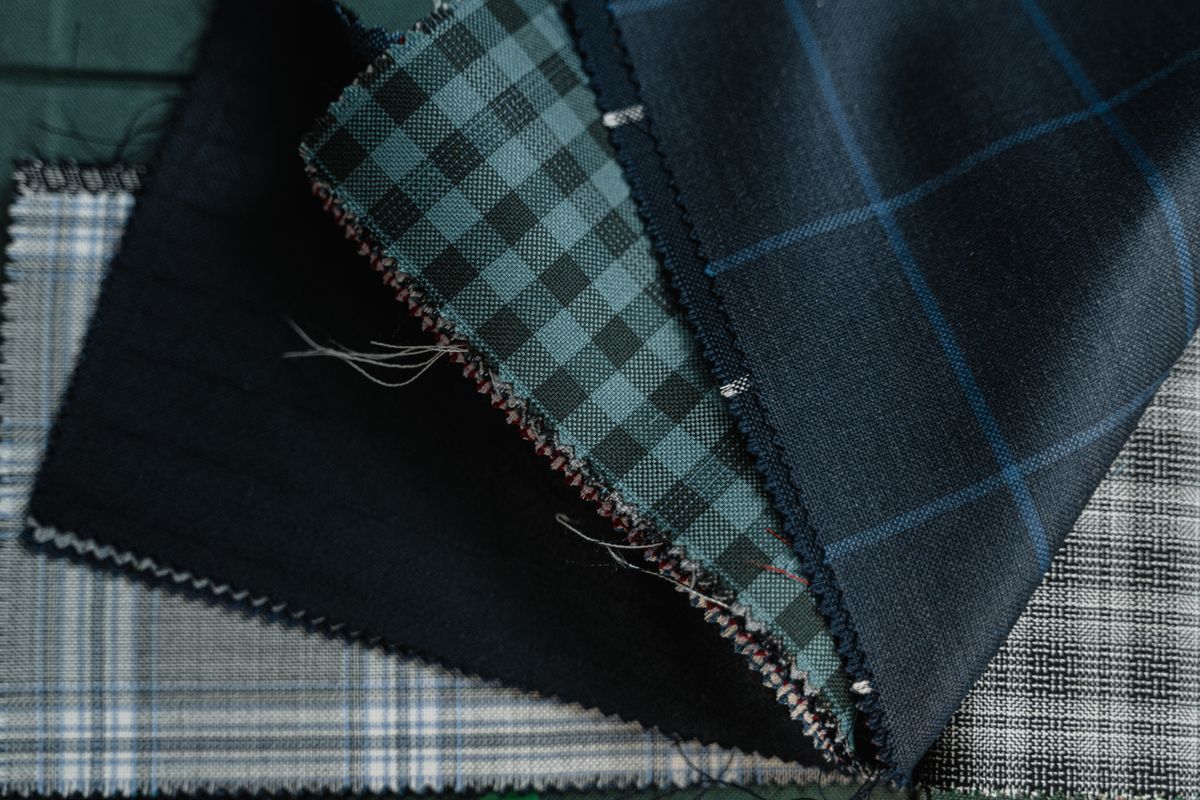
Every field below comes from preparatory work, not adopted law. The European Parliament Research Service mapped roughly six data categories for textiles; the Commission's JRC preparatory study (3rd milestone, December 2025) proposes around 50 data points and specific scoring methods. The clearest single proposal is a recyclability score from 0 to 10 driven by fibre homogeneity — mono-material products score higher, and the JRC draft would classify items above 15% elastane as non-recyclable.
For an outerwear maker, the signal is to start capturing fibre composition, recycled-content percentages and chemical references at batch level now, because these are the fields least likely to change shape even as the exact taxonomy is finalised. This maps cleanly onto the BOM and material specs a competent factory already documents for premium women's coat construction and material specifications.
A wool-cashmere coat scores well on fibre homogeneity; a heavily blended shell with elastane does not.
| Metric | Value | Source |
|---|---|---|
| Core DPP data categories identified for textiles | 6: material composition, manufacturing processes, environmental indicators, chemical compliance, traceability, durability/repairability/recyclability | European Parliament Research Service |
| Proposed DPP coverage areas (per JRC preparatory study; not yet adopted) | 5 areas: materials, manufacturing/sourcing, environmental indicators, durability and repairability, end-of-life guidance | Carbonfact (citing JRC) |
| Anticipated DPP data fields for textiles (expected per EPRS 2024 / EC preparatory study 2025) | Material composition, manufacturing processes, environmental indicators, chemical-compliance references (REACH), supply-chain traceability, durability and recyclability information | EPRS (2024) / EC Preparatory Study (2025) |
| Proposed recyclability score format (JRC 3rd milestone, Dec 2025; not yet adopted) | 0-10 scale based on fibre homogeneity; products above 15% elastane proposed as non-recyclable (score 0) | European Commission / JRC |
| Proposed product-identification standard (per GS1 Europe; mandate not yet in adopted delegated act) | GTIN to identify the product model/variant; GLN to identify manufacturers, suppliers and facilities | GS1 Europe |
| Expected fibre-composition data depth (proposed per JRC study; not yet binding) | Fibre type + blend percentages + fabric weights + dye/finishing disclosures + recycled-content proportion + substances of concern | Tracex Tech (citing JRC) |
These fields are proposed design options from the JRC preparatory study and ESPR Annex, not adopted law. The exact taxonomy will be set when the textile delegated act is published. Footwear is excluded from the textile delegated act (subject to a separate study).
3. What Is Settled Versus What Is Proposed: Product Scope and Legal Status
The single most useful fact for planning is also the most reassuring: until the textile delegated act is adopted and published in the Official Journal, no textile-specific DPP data requirement is legally binding. That is the settled state as of mid-2026. What the JRC has proposed — durability standards, recycled-content minima, chemical restrictions, end-of-life information — signals direction, not obligation.
One proposal has been explicitly walked back. The JRC's 3rd milestone retreated from mandatory repairability scoring to a voluntary requirement to list repair-service contact details. Coats and jackets fall inside the expected garment scope; footwear sits outside it.
No textile DPP field is binding until the delegated act is published. Everything else is a draft.
| Metric | Value | Source |
|---|---|---|
| Legal status of textile-specific ESPR/DPP requirements as of 2026 (settled fact) | Not legally binding until the textile delegated act is formally adopted and published in the Official Journal | ESPR Registry |
| Expected ESPR textile product scope (proposed; not yet finalised) | Garments — t-shirts, shirts, sweaters, jackets, trousers, dresses, underwear, socks — and accessories; footwear excluded pending a separate study | Regen Studio (citing JRC) |
| EU textile EPR product scope (settled — revised Waste Framework Directive) | Clothing and accessories, hats, footwear, blankets, bed and kitchen linen, curtains; non-EU producers selling via e-commerce explicitly included | European Commission / European Parliament |
| Proposed mandatory ecodesign requirement categories (per JRC; not yet adopted) | 3 core themes: durability standards, recycled-content minima, chemical-use restrictions | ESPR Registry (summarising JRC) |
| Proposed end-of-life data requirement (per JRC; not yet adopted) | End-of-life information including recycling guidance and care instructions | Carbonfact (citing JRC) |
| Proposed repairability data requirement (JRC 3rd milestone retreated to voluntary) | Voluntary repair-service contact information and care instructions only — mandatory spare-part SKUs and disassembly instructions are NOT in the current JRC proposal | JRC 3rd milestone |
Distinguish two regimes: the textile DPP (data fields, not yet binding) and textile EPR (waste/recycling fees, already binding via the Waste Framework Directive). Both reach non-EU producers, but only EPR has firm operational dates. The repairability row is a widely reported requirement, but the JRC 3rd milestone proposes only voluntary repair-contact info; the original delegated-act text is unverified because not yet adopted.
4. How Your China Factory's Existing Certifications Already Map to DPP Fields
Most of the data a DPP will want already exists in certificates a competent factory holds. A Global Recycled Standard chain of custody produces exactly the recycled-content and traceability records a DPP needs: 20% recycled content qualifies a product for B2B GRS use, 50% for consumer-facing labelling, with a Transaction Certificate issued for each shipment leg and a Scope Certificate for each actor. OEKO-TEX Standard 100 — whose updated limit values became binding on 1 June 2026 — is the chemical-compliance evidence.
The work is less about new testing and more about making sure these certificates are current, digital, and linkable to a specific production batch. A factory with BSCI, GRS, and OEKO-TEX certifications already on file is already generating most DPP-relevant data; the same certificate stack also underpins sustainable outerwear manufacturing with wool and natural fibres.
GRS Transaction Certificates are recycled-content DPP fields in everything but name.
| Metric | Value | Source |
|---|---|---|
| GRS minimum recycled content for B2B certification | 20% | Textile Exchange |
| GRS minimum recycled content for consumer-facing labelling | 50% | Textile Exchange |
| GRS chain-of-custody documents | 1 Transaction Certificate per shipment leg; a Scope Certificate per supply-chain actor | Textile Exchange |
| GRS version and Materials Matter transition | GRS 4.0 (v4.2 Implementation Manual); Materials Matter criteria released 12 Dec 2025, effective 31 Dec 2026, mandatory 31 Dec 2027 | Textile Exchange |
| OEKO-TEX Standard 100 updated limit values became binding | 1 June 2026 (communicated 3 March 2026, three-month transition) | OEKO-TEX / Hohenstein |
| OEKO-TEX 2026 new testing rule | From June 2026, a second test series runs within the certificate validity year when a risk parameter (legally restricted EU substance) is flagged | OEKO-TEX / Hohenstein |
| OEKO-TEX 2026 ECO PASSPORT biodegradability requirement | From June 2026, surfactants, water softeners and complexing agents must prove biodegradability (testing, verified third party, or ECHA listing) | OEKO-TEX / Hohenstein |
The mapping in practice: GRS TC/SC records feed the DPP recycled-content and chain-of-custody fields; OEKO-TEX Standard 100 feeds the chemical-compliance field; BSCI audit reports feed supply-chain traceability.
5. Proof It Can Work: the NAFFIC + Aware China-Europe Textile DPP Pilot (Suzhou, March 2026)
The pilot answers the only question a brand actually cares about: can a China supply chain produce a verifiable DPP today? On 26 March 2026 in Suzhou, NAFFIC and Aware demonstrated the first China-Europe textile DPP, tracing recycled-polyester garments for European brand Iqoniq across five verified steps — from post-consumer PET bottles through NAFFIC's STCP feedstock verification, yarn, fabric, to finished garment — recorded on a public blockchain and readable from a single QR code.
The relevance to outerwear is direct: an rPET shell or lining can carry the same kind of verified chain of custody, provided the factory and its upstream mills participate in the data capture from the raw-material stage. That participation depends on a 16-year specialist factory's traceability and record-keeping practice extending up to the mill.
Five verified steps, one QR code, post-consumer bottle to finished garment — demonstrated, not theorised.
| Metric | Value | Source |
|---|---|---|
| NAFFIC-Aware China-Europe DPP pilot demonstration date | 26 March 2026 (Le Meridien Suzhou) | NAFFIC / Aware |
| Summit attendance (organiser-reported) | 250-300 government officials and textile industry leaders from China and Europe | NAFFIC / Aware |
| Supply-chain steps traced in the pilot | 5 verified steps: post-consumer PET collection → NAFFIC STCP flake processing → Jiangsu Reborn Eco-Tech yarn → Wujiang Chaodai fabric → Suzhou Qiandai finished garment | NAFFIC / Aware |
| Traceability method | Public blockchain + a single QR code (Crypto TC blockchain-issued Transaction Certificates) | NAFFIC / Aware |
| Recycled-feedstock verification mechanism | NAFFIC's Sustainable Textiles Credible Platform (STCP) verifies bottle-to-flake recycled content and issues Feedstock Source Declarations | NAFFIC / Aware |
| Pilot product and end brand | Recycled-polyester (rPET) garment from post-consumer PET bottles, for European brand Iqoniq | NAFFIC / Aware |
Attendance and "world's first" framing are organiser-reported. The verifiable substance — five traced steps, blockchain records, STCP feedstock verification — is corroborated across trade press (Textile Today, Just-Style, Ecotextile).
6. What to Set Up Now: Data Carriers, Lead Times, and the 2025-2026 Preparation Window
Lead time is the reason to start before the law lands. Materials made today reach European consumers as finished products in one to three years, so coats entering production now may still be on shelves when the textile rules bite. Industry implementers advise using 2025-2026 to link physical products to digital records, and the EU-funded CIRPASS-2 project (May 2024-April 2027) is piloting exactly this across textiles and three other sectors.
The data carrier is converging on one answer: GS1 Digital Link encoded in a QR code, now codified in EN 18220 and already used in named pilots by Kappahl and Marimekko. For a factory, the actionable step is to attach a scannable, GS1-compliant QR carrier and start populating the record per production batch — part of the factory documentation a brand should request before each production run.
By 19 July 2026, the EU's central Digital Product Passport registry must be operational — the structural deadline that starts the clock for textiles, even though the coat-specific data fields won't be legally binding until the textile delegated act is adopted, targeted for 2027.
A coat cut today ships into a 2028 rulebook. The preparation window is now, not at adoption.
| Metric | Value | Source |
|---|---|---|
| Advised DPP preparation window for textile brands | 2025-2026 for data collection, system integration, and data-carrier implementation ahead of delegated acts expected 2027 | Trimco Group |
| Lead time from material manufacture to European consumer | 1-3 years | NAFFIC / Aware |
| CIRPASS-2 DPP pilot duration and scope | May 2024 - April 2027; 13 lighthouse pilots across textiles, electrical/electronic equipment, tyres, and construction | European Commission / CIRPASS-2 |
| GS1 Digital Link data carrier | Links product information to the web via a QR code and generates a GTIN; codified in EN 18220, published 25 May 2026 | GS1 Sweden |
| Named GS1 DPP textile pilot brands | Kappahl and Marimekko (first products launched January 2024 using GS1 Digital Link QR codes, Trace4Value) | GS1 Sweden |
| Permitted DPP data-carrier formats (consensus per CIRPASS / EN 18220) | QR code, GS1 DataMatrix, RFID tag, or NFC chip — at least one physically attached to the product or packaging | CIRPASS / EN 18220:2026 |
The GS1 Digital Link QR carrier is the de facto emerging standard, but the data-carrier mandate is finalised only when the textile delegated act references the harmonised standards. Building to EN 18220 now is low-risk because it is already the published harmonised standard.
7. How DPP Overlaps With Textile EPR, REACH, and the France Eco-Score
DPP is one layer in a stack, and the nearer-term obligations are the ones with firm dates. Textile EPR is already binding: the revised Waste Framework Directive entered into force on 16 October 2025, and member states must run operational EPR schemes by April 2028, with fees modulated by durability, recyclability, recycled content and fast-fashion practices. France runs further ahead — its Ecobalyse environmental-cost score (16 PEF indicators) opened to third-party publication on 1 October 2026, meaning an NGO or retailer can score a brand's coats without the brand's consent.
The same product data — fibre, recycled content, country of production, chemical references — feeds EPR fee modulation, the France score, and a future DPP. Collect it once, structured per batch, and it serves all three.
One structured dataset per batch answers EPR, the France eco-score, and the future DPP at once.
| Metric | Value | Source |
|---|---|---|
| Revised EU Waste Framework Directive (textile EPR) entered into force | 16 October 2025 | European Commission |
| Deadline for operational national textile EPR schemes | April 2028 (30 months from entry into force; transposition by ~June 2027) | European Commission |
| Textile EPR fee modulation criteria | Weight, recycled content, recyclability, and fast-fashion / ultra-fast-fashion practices | European Commission / European Parliament |
| France Ecobalyse environmental-cost indicators | 16 indicators (PEF methodology: GHG emissions, water, land, energy, mineral depletion, toxicity) | French government / Ecobalyse (ADEME) |
| France Ecobalyse third-party open-scoring date | 1 October 2026 — any third party can publish a brand's score without prior approval | French government |
| France Ecobalyse scope | All producers, importers and distributors placing textiles on the French market, regardless of country of origin | Intertek / French decree |
| EU regulatory stack DPP sits within (2026) | REACH, PPWR, GPSR, ECGT (Green Claims), CSRD, Textile Labelling, EPR, and DPP — all needing product-level data | Reconomy / EC overview |
EPR and the France eco-score are binding now or imminently; DPP data fields are still proposed. For a coat brand, the nearer triggers — April 2028 EPR, 1 October 2026 France third-party scoring — drive the timeline more than the not-yet-adopted textile DPP.
Summary: EU Textile DPP for Outerwear by the Numbers
| Metric | Value | Source |
|---|---|---|
| ESPR entered into force | 18 July 2024 | European Commission / EUR-Lex |
| Central DPP registry deadline (ESPR Art. 13) | 19 July 2026 | European Commission / EUR-Lex |
| Battery passport mandatory (first DPP) | 18 February 2027 | EU Battery Regulation 2023/1542 |
| ESPR textile delegated act (indicative, not yet adopted) | 2027 (expected) | European Commission |
| Harmonised DPP standards published (EN 18219 / EN 18220) | 25 May 2026 | CEN/CENELEC via GS1 Sweden |
| Textiles named ESPR priority product group | Yes (COM(2025) 187, Apr 2025) | European Commission |
| Textile EPR (Waste Framework Directive) in force | 16 October 2025 | European Commission |
| Operational textile EPR schemes deadline | April 2028 | European Commission |
| Textile EPR product scope | Clothing/accessories, hats, footwear, blankets, linen, curtains; non-EU producers included | European Commission / European Parliament |
| Legal status of textile DPP fields (as of 2026) | Not binding until delegated act published in the Official Journal | ESPR Registry |
| Core DPP data categories for textiles (EPRS) | 6: composition, manufacturing, environment, chemical compliance, traceability, durability | European Parliament Research Service |
| Proposed recyclability score (JRC, not yet adopted) | 0-10 by fibre homogeneity; >15% elastane = non-recyclable | European Commission / JRC |
| GRS minimum recycled content (B2B / consumer label) | 20% / 50% | Textile Exchange |
| OEKO-TEX Standard 100 updated limits binding | 1 June 2026 | OEKO-TEX / Hohenstein |
| NAFFIC-Aware Suzhou DPP pilot demonstrated | 26 March 2026; 5 traced steps; blockchain + QR | NAFFIC / Aware |
| CIRPASS-2 DPP pilot | May 2024 - April 2027; 13 pilots incl. textiles | European Commission / CIRPASS-2 |
| Emerging DPP data carrier | GS1 Digital Link QR (EN 18220) | GS1 Sweden |
| France Ecobalyse third-party open scoring | 1 October 2026 | French government |
| France Ecobalyse environmental indicators | 16 (PEF methodology) | Intertek / French decree |
| France's textile EPR launch (world's first) | 2007 (Refashion) | Ellen MacArthur Foundation |
Methodology and Sources
This reference aggregates 46 verified data points on the EU Digital Product Passport as it applies to outerwear sourced from China, prioritising primary EU institutional documents and primary standard-owners. The central caveat: as of June 2026 the ESPR textile delegated act has not been adopted, so no textile-specific DPP data field is yet binding law. Every figure describing a "required" DPP field is flagged inline as proposed or expected. The settled obligations are the framework dates, the separate textile EPR regime, certification facts (GRS, OEKO-TEX), and the France eco-score.
- European Commission / EUR-Lex — ESPR Regulation (EU) 2024/1781
- European Commission — ESPR Working Plan 2025-2030 (COM(2025) 187)
- European Commission Environment DG — revised Waste Framework Directive (textile EPR)
- European Parliament — new textile and food waste rules
- European Parliament Research Service — DPP for the textile sector (EPRS_STU(2024)757808)
- European Commission JRC — Textile Preparatory Study, 3rd Milestone (Dec 2025)
- CEN/CENELEC — DPP framework standards (via GS1 Sweden)
- GS1 Europe — GS1 Standards Enabling the EU DPP (V2.2, Apr 2025)
- GS1 Sweden — DPP pilot in textiles (Kappahl, Marimekko)
- CIRPASS-2 Project (EU Digital Europe Programme)
- Textile Exchange — Global Recycled Standard (GRS)
- OEKO-TEX Association / Hohenstein — New Regulations 2026
- Carbonfact — French eco-score / Ecobalyse methodology
- Intertek — France environmental cost labelling
- Reconomy — EU Digital Product Passports: A Business Guide (Feb 2026)
- Ellen MacArthur Foundation — EPR for textiles in France
- NAFFIC / Aware — World's First China-Europe DPP for Textiles
Last updated: June 2026. Updated quarterly; the next textile delegated-act milestone is the key trigger to watch.
R
Written by
Ray Wang
Women's outerwear manufacturing specialist with 13 years of experience producing wool, cashmere, and down coats for fashion brands across Europe and North America at JX Apparel Group in Jiaxing, China.
Related Insights
Compliance
Traceable Cashmere and Wool Sourcing Statistics (2026): 50+ Data Points on Tier Mapping, Certification Chain of Custody, and Fiber-Origin Verification
20 min readCompliance
EU Unsold Apparel Destruction Ban Statistics (2026): 45+ Data Points on Who It Binds, Disclosure Duties, and What Your China Coat Factory Must Document
15 min readCompliance
EU PPWR Packaging Compliance Statistics (2026): 40+ Data Points on Deadlines, Recycled Content, and What China Coat Factories Must Change
12 min readReady to Source?
Work with a Factory That Specialises in Premium Outerwear
20+ years of team experience in mid-to-high-end women's coats and jackets. Low MOQ from 200 pcs. Cashmere, wool, silk capabilities.
Get in Touch →