JX Apparel Group
Compliance
EU Textile EPR Statistics (2026): 45+ Data Points on Eco-Modulation Fees, Member-State Deadlines, and What a China Coat Factory Must Document
By Ray Wang·June 22, 2026·12 min read
73% of discarded EU textiles still went to landfill or incineration in 2022 — the waste problem the new producer-pays rules are built to fund, and the bill now attaches to anyone placing coats on the EU market.
The EU's textile Extended Producer Responsibility (EPR) is no longer a proposal. Directive (EU) 2025/1892 — the revised Waste Framework Directive — entered into force on 16 October 2025, and every Member State must have an operational textile EPR scheme by 17 April 2028. The obligation applies regardless of where a brand or its factory sits: a label in New York and a coat factory in Jiaxing are captured exactly as a Paris brand is. The data needed to register is the data the factory already holds.
Key Takeaways
- 16 October 2025 — Directive (EU) 2025/1892, the revised EU Waste Framework Directive, entered into force, the first binding EU-wide textile EPR requirement (European Commission, DG Environment)
- 17 June 2027 is the deadline for Member States to transpose the directive into national law — 20 months after entry into force (Directive (EU) 2025/1892)
- 17 April 2028 is the deadline for every Member State to have a textile and footwear EPR scheme operational — 30 months after entry into force (Directive (EU) 2025/1892)
- Non-EU sellers are included — the obligation attaches to anyone placing textile products on the EU market, including brands and marketplace sellers based in the US, UK, and China (ComplianceGate / Directive (EU) 2025/1892 Art. 22a)
- €1,000 per tonne is France's Refashion recycled-material bonus for closed-loop recycling, with €500 per tonne for open-loop (Refashion)
- 50% tariff discount applies under Refashion to garments incorporating at least 15% post-consumer recycled fibre — the only genuine 50% in France's textile scheme (TraceForGood)
- 8 certification labels qualify for France's Refashion certification bonus — OEKO-TEX MADE IN GREEN, GOTS, Bluesign, EU Ecolabel, Demeter, BioRe, Fairtrade Textile, and Ecocert ERTS L2 — BSCI is not among them (Refashion)
- 1 July 2026 is the date all covered producers selling textiles in California must join the approved PRO under SB 707, the first US EPR law for apparel and textiles (CalRecycle / SB 707)
- More than $1 million in annual aggregate global turnover is the threshold that makes a producer subject to California SB 707 registration (California Legislature, SB 707)
- 6.94 million tonnes of textile waste were generated in the EU27 in 2022 — about 16 kg per person — the scale the producer-pays system is designed to fund (European Environment Agency)
- 73% of discarded EU textiles still went to landfill or incineration in 2022 once uncollected household textiles are counted (European Environment Agency)
- 20% / 50% are the minimum recycled-content thresholds for a GRS business-to-business certification versus the consumer-facing GRS label — the recycled-content evidence eco-modulation rewards (Textile Exchange)
1. The EU Textile EPR Directive: In Force October 2025, Member-State Schemes by April 2028
Two dates do most of the work here, and the blogs that conflate them will cost a brand a missed registration. The revised Waste Framework Directive — Directive (EU) 2025/1892 — entered into force on 16 October 2025. From that point, Member States have 20 months to write it into national law (by 17 June 2027) and 30 months to stand up working EPR schemes (by 17 April 2028). Transposition and scheme go-live are not the same milestone, and the gap between them is where brands get caught.
A coat brand selling into the EU is liable wherever it sits. The obligation attaches to placing textile products on the EU market, so a brand in New York or a factory in Jiaxing is captured exactly as a Paris label is. For a direct Jiaxing factory partner for premium women's coats, the practical reading is simple — the data your buyers will need to register is the data the factory already holds on the tech pack and BOM.
Every Member State must have an operational textile EPR scheme by 17 April 2028 — and the obligation applies to any brand placing coats on the EU market, regardless of whether the brand or its factory is based in the US, UK, or China.
| Metric | Value | Source |
|---|---|---|
| Revised Waste Framework Directive entered into force | 16 October 2025 | European Commission (DG Environment) |
| Member-state transposition deadline (into national law) | 17 June 2027 (20 months) | Directive (EU) 2025/1892 |
| Deadline to establish operational textile and footwear EPR schemes | 17 April 2028 (30 months) | Directive (EU) 2025/1892 |
| Micro-enterprise grace period after schemes established | +12 months (approx. April 2029) | Directive (EU) 2025/1892 |
| First EU-wide mandatory textile EPR requirement | Established by the 2025 directive (first time at EU level) | European Commission (DG Environment) |
| Product scope of the textile EPR | Textiles and footwear products (coats fall squarely within apparel) | Directive (EU) 2025/1892 |
| Applicability to non-EU producers (US, UK, China sellers) | Applies to all producers placing textiles on the EU market regardless of HQ location | ComplianceGate / Directive (EU) 2025/1892 Art. 22a |
Per the directive's Annex/Art. 22a, the precise product-category list and any PPE/medical carve-out is still being clarified — high-level apparel scope is confirmed.
2. How Eco-Modulation Works: Fees Bent by Durability, Recyclability, and Recycled Content
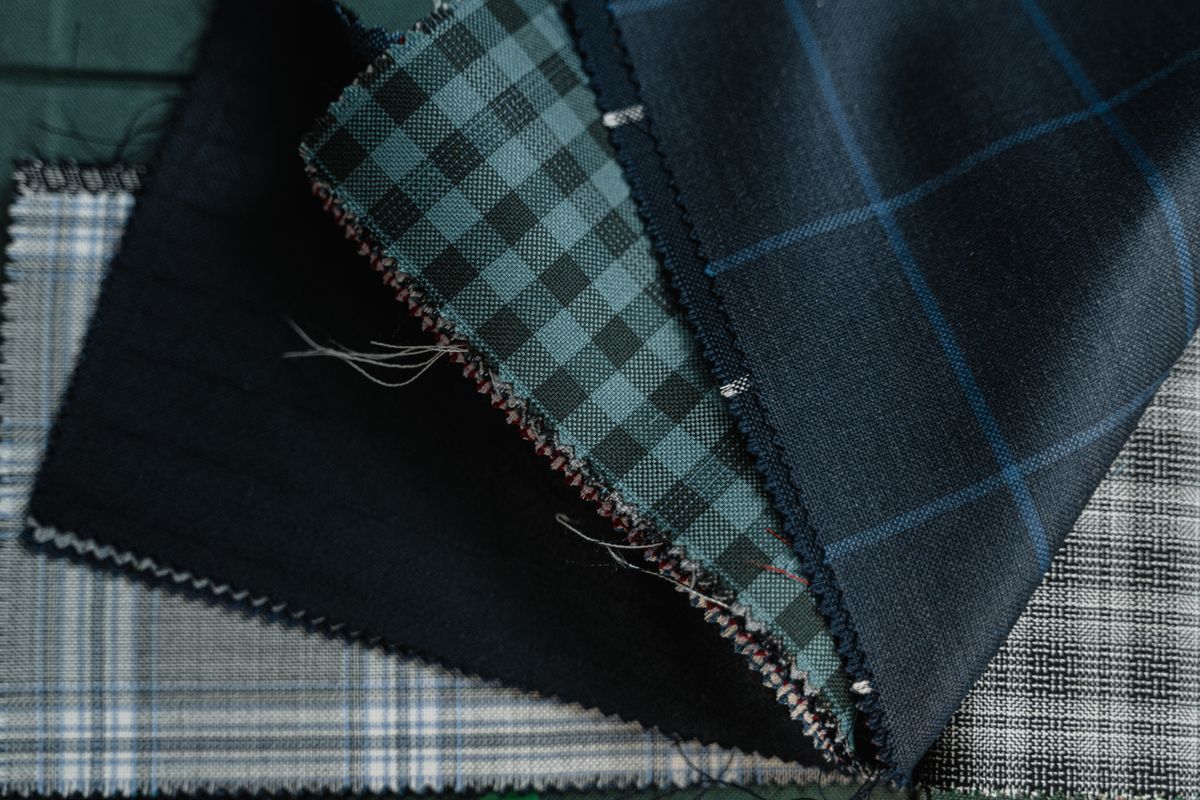
The directive does not set a number. It sets a direction: producer fees must be modulated by durability, reusability, reparability, and fibre-to-fibre recyclability, drawing on the measurement methods being developed under the Ecodesign for Sustainable Products Regulation (ESPR). Durable, recyclable products pay less; products that are hard to recycle or contain hazardous substances pay more.
Two cautions matter for any brief that quotes this section. First, no EU-wide durability-index threshold exists yet — the numeric criteria are still being written under ESPR delegated acts, so any fixed figure such as a wash-cycle count or an index score is not yet defined at EU level. Second, Member States may also load the fee against fast-fashion practices, such as how many new product references a producer pushes per market segment. Until the EU numbers land, France's live Refashion grid is the only working model of what these fees look like in euros.
| Metric | Value | Source |
|---|---|---|
| Basis of fee modulation (eco-modulation criteria) | Durability, reusability, reparability, fibre-to-fibre recyclability (ESPR-aligned) | Directive (EU) 2025/1892, Recital 39 |
| EPR fees adjusted on ESPR sustainability criteria | Confirmed; numeric thresholds not yet defined at EU level | European Commission (DG Environment) |
| Fast-fashion modulation mechanism (malus) | Member States may modulate fees by frequency of offers / product references per market segment | Directive (EU) 2025/1892, Recital 40 |
| Scope of producer-financed activities | Collection, sorting, preparing for re-use, re-use, recycling and other treatment of textile and footwear waste | Directive (EU) 2025/1892, Recital 31 |
| Bonus-malus principle (qualitative) | Durable / recyclable products pay less; hard-to-recycle, hazardous, or short-life products pay more | PassportCraft (explanatory; no fixed regulatory threshold) |
The "falls apart after ten washes" framing seen in trade blogs is illustrative only — no EU-wide durability-index number is yet defined. Treat as qualitative.
3. France's Refashion Scale: The Live Eco-Modulation Model the EU Is Transposing
France runs the only mature textile EPR in Europe, and its bonuses are fixed euro amounts per style — not, as several aggregators claim, an "up to 50% cut of the base fee." That 50% figure belongs to France's furniture EPR; the real textile bonuses are concrete. A certification bonus pays €0.30 per item for the first 100,000 units of a product category and €0.03 beyond it. A durability bonus pays €0.70 (then €0.07 above 100,000 units), multiplied by a category factor of 0.5 to 1.5 across 11 product categories. Recycled material earns €1,000 per tonne in closed-loop recycling, €500 per tonne open-loop.
The one genuine 50% in the textile scheme is narrow and worth chasing: garments with at least 15% post-consumer recycled fibre get a 50% discount on the standard tariff. Penalties run the other way — products with metalloplastic fibres or electrical components that disrupt recycling pay more. France switched the penalty on alongside the bonus on 1 January 2025, and the rest of the EU is now building toward the same logic. This live grid is also what France's environmental cost score (Ecobalyse) sits beside as the second French data demand on a coat brand.
| Metric | Value | Source |
|---|---|---|
| Certification bonus per item | €0.30 (first 100,000 units/category) / €0.03 (beyond) | Refashion |
| Durability bonus per item | €0.70 (first 100,000 units/category) / €0.07 (beyond), × category factor | Refashion |
| Durability bonus category factor | 0.5 to 1.5 across 11 product categories | Refashion |
| Recycled material bonus (closed-loop / open-loop) | €1,000 per tonne closed-loop / €500 per tonne open-loop | Refashion |
| Discount for ≥15% post-consumer recycled fibre | 50% discount on the standard tariff | TraceForGood |
| Recyclability penalty triggers (malus) | Electronic/electrical components and metalloplastic fibres (recycling disruptors) | Refashion |
| Date France's eco-modulation penalty (malus) came into force | 1 January 2025 | Refashion |
Estimated per-item base fee (before modulation) is ~€0.01 average and ~€0.06 maximum (aggregator-computed by Carbonfact / EPR Representative, not a Refashion table figure). The official simplified per-piece tariffs are higher: €0.5799 clothing, €0.6525 linen, €0.6414 footwear.
4. Which Member States Move First: Netherlands Live, Germany Drafting, EU Backstop 2028
The schemes will not arrive on one day. The Netherlands has run a textile EPR since 1 July 2023, well ahead of the EU mandate, and France's Refashion predates the directive entirely. Germany published a key-points paper through its environment ministry (BMUV) on 27 March 2026, proposing a 70% collection target, 95% recovery, and 85% recycling — figures still in draft, not yet enacted, but a clear signal of where the largest EU market is heading, with its own transposition due by 17 June 2027.
EURATEX, the European apparel federation, frames the same dual window the Commission does: 20 months to transpose, 30 months for PROs to be operational. A brand selling coats across several Member States should expect to register and report scheme by scheme, not once for the bloc — which makes a single, clean factory dataset the cheapest way to feed multiple national portals.
| Metric | Value | Source |
|---|---|---|
| Netherlands textile EPR operational (EU first-mover) | 1 July 2023 | Netherlands ILT |
| Germany proposed collection target (PROPOSED) | 70% collection rate | German Federal Ministry for the Environment (BMUV), via Die Produktkanzlei |
| Germany proposed recovery target (PROPOSED) | 95% recovery rate | German Federal Ministry for the Environment (BMUV), via Die Produktkanzlei |
| Germany proposed recycling target (PROPOSED) | 85% recycling rate | German Federal Ministry for the Environment (BMUV), via Die Produktkanzlei |
| Germany transposition target | 17 June 2027 (EU deadline applied to Germany) | BMUV / EURATEX, via Die Produktkanzlei |
| EU transposition / PRO-operational windows (corroboration) | 20 months to transpose / 30 months for PROs operational | EURATEX |
Germany's 70/95/85 targets are proposed in a 27 March 2026 BMUV key-points paper (comment period to 24 April 2026) and are not yet enacted law.
5. California SB 707: Active July 2026 — How US Producer Responsibility Differs from EU EPR
The US has its own clock, and it runs faster than the EU's for any brand that also sells stateside. California's Responsible Textile Recovery Act (SB 707) is the first US EPR law for apparel and textiles. CalRecycle approved Landbell USA as the state's textile PRO on 27 February 2026, and every covered producer must join it by 1 July 2026. "Covered" is broad: more than $1 million in annual aggregate global turnover triggers the obligation.
The mechanism differs from Europe's in shape — California phases in through a single state PRO with a stewardship plan due by 1 July 2030 and implementing regulations no earlier than 1 July 2028 — but the documentation burden converges. A China coat factory supplying both an EU and a California brand is asked the same underlying questions: what is in the garment, and how much of it is recycled. Brands running full-package OEM and ODM coat production with documented inputs find the registration data is already on the spec sheet.
| Metric | Value | Source |
|---|---|---|
| SB 707 status | First US EPR law for apparel and textiles | CalRecycle |
| CalRecycle approved Landbell USA as textile PRO | 27 February 2026 | CalRecycle |
| Deadline for covered producers to join the PRO | 1 July 2026 | CalRecycle / SB 707 (PRC s.42984.4) |
| Global turnover threshold for SB 707 coverage | More than $1 million annual aggregate global turnover | California Legislature (SB 707), PRC s.42984.3 |
| Implementing regulations effective no earlier than | 1 July 2028 | California Legislature (SB 707), PRC s.42984.2 |
| Deadline for PRO's CalRecycle-approved stewardship plan | 1 July 2030 | California Legislature (SB 707), PRC s.42984.8 |
A proposed PRO had to apply by 1 January 2026 and CalRecycle had to approve by 1 March 2026; Landbell USA was approved 27 February 2026 after a competitive process.
6. Why EPR Exists: The EU Textile-Waste Numbers Behind the Producer-Pays Rules
The fees are a response to a measured failure. The EU27 generated 6.94 million tonnes of textile waste in 2022 — 16 kg for every person — and only 4.6 kg per person was separately collected, against 11.1 kg that was not. Once those uncollected household textiles are counted, 73% of discarded textiles went to landfill or incineration in 2022.
The separated stream has improved: landfilling of collected textile waste fell from 21% in 2010 to 12% in 2022, though incineration rose from 10% to 15% over the same period. These are the numbers the producer-pays model is built to move, and they explain why the fee is bent toward durability and recyclability rather than levied flat. For a coat — a long-life garment by design — the data cuts in the brand's favour, provided the construction and fibre content can be evidenced.
| Metric | Value | Source |
|---|---|---|
| EU27 textile waste generated per year | 6.94 million tonnes (2022) | European Environment Agency |
| EU textile waste generated per person | 16 kg per person (2022) | European Environment Agency |
| EU textiles separately collected per person | 4.6 kg per person (2022) | European Environment Agency |
| EU textiles NOT separately collected per person | 11.1 kg per person (2022) | European Environment Agency |
| Discarded EU textiles landfilled or incinerated (incl. uncollected) | 73% (2022) | European Environment Agency (citing ETC CE, 2024) |
| Collected textile waste sent to landfill | 12% in 2022 (down from 21% in 2010) | European Environment Agency |
| Collected textile waste sent to incineration | 15% in 2022 (up from 10% in 2010) | European Environment Agency |
7. What a China Coat Factory Must Document: Fibre Composition, GRS Recycled Content, and Where BSCI Fits
EPR registration runs on factory data, and the factory either has it cleanly or scrambles for it. Producers must register in each Member State of sale, join a PRO, and report annual volumes and composition — which means fibre content per style, recycled-content percentage, and production country have to be evidenced, not asserted. Recycled content is where the bonus lives, and the Global Recycled Standard (GRS) is the proof: at least 20% recycled content for a business-to-business GRS certification, and at least 50% to carry the consumer-facing GRS label.
Certification feeds France's bonus directly — OEKO-TEX MADE IN GREEN, which marked ten years in 2025, is one of the eight Refashion bonus labels, and the claim is made with an OEKO-TEX product-list certificate naming each reference. One distinction matters and is often muddled: BSCI is a social-audit programme run by amfori, not an eco-modulation lever. A factory's GRS-certified recycled content and BSCI social-compliance documentation serve two different files — BSCI evidences working conditions, while GRS and OEKO-TEX evidence the fee reduction.
This is the same fibre-and-origin dataset that the EU Digital Product Passport for outerwear will require, so building it once serves both regimes. A brand that wants to act now can request a documented coat sample with fibre and recycled-content data and have the registration evidence in hand before the schemes go live.
| Metric | Value | Source |
|---|---|---|
| Producer registration obligation | Register in each Member State of sale, join a PRO, report annual volume and composition | Carbonfact |
| GRS minimum recycled content (B2B certification) | 20% | Textile Exchange |
| GRS minimum recycled content (consumer-facing label) | 50% | Textile Exchange |
| OEKO-TEX MADE IN GREEN as a Refashion bonus label | 10 years operating (launched 2015; decade marked 2025) | OEKO-TEX |
| Documentation for the Refashion certification bonus | Valid OEKO-TEX product-list certificate naming each product reference | Testex |
BSCI (amfori) is a social-compliance audit, not an eco-modulation certification — it carries zero fee-reduction value and belongs in a separate documentation file from GRS/OEKO-TEX.
Summary: EU Textile EPR by the Numbers
| Metric | Value | Source |
|---|---|---|
| Revised Waste Framework Directive in force | 16 October 2025 | European Commission |
| Member-state transposition deadline | 17 June 2027 (20 months) | Directive (EU) 2025/1892 |
| Deadline for operational EPR schemes | 17 April 2028 (30 months) | Directive (EU) 2025/1892 |
| Micro-enterprise grace period after schemes established | +12 months (approx. April 2029) | Directive (EU) 2025/1892 |
| Applies to non-EU producers (US/UK/China sellers) | Yes — obligation attaches to placing on EU market | ComplianceGate / Directive (EU) 2025/1892 |
| Eco-modulation basis | Durability, reusability, reparability, fibre-to-fibre recyclability | Directive (EU) 2025/1892, Recital 39 |
| Fast-fashion modulation mechanism (malus) | Member States may modulate fees by frequency of offers / product references | Directive (EU) 2025/1892, Recital 40 |
| EU transposition / PRO-operational windows (corroboration) | 20 months to transpose / 30 months for PROs operational | EURATEX |
| Netherlands textile EPR operational | 1 July 2023 (EU first-mover) | Netherlands ILT |
| Germany proposed collection / recovery / recycling targets | 70% / 95% / 85% (PROPOSED) | BMUV, via Die Produktkanzlei |
| Certification bonus per item (Refashion) | €0.30 first 100k units / €0.03 beyond | Refashion |
| Durability bonus per item (Refashion) | €0.70 first 100k units / €0.07 beyond, × category factor 0.5–1.5 | Refashion |
| Recycled material bonus (Refashion) | €1,000/tonne closed-loop / €500/tonne open-loop | Refashion |
| Discount for ≥15% post-consumer recycled fibre | 50% off standard tariff | TraceForGood |
| California SB 707 | First US EPR law for apparel and textiles | CalRecycle |
| SB 707 producers must join PRO by | 1 July 2026 | CalRecycle / SB 707 |
| SB 707 coverage threshold | >$1M annual aggregate global turnover | California Legislature (SB 707) |
| SB 707 implementing regulations effective no earlier than | 1 July 2028 | California Legislature (SB 707) |
| EU27 textile waste generated (2022) | 6.94 million tonnes / 16 kg per person | European Environment Agency |
| Discarded EU textiles landfilled or incinerated (2022) | 73% | European Environment Agency |
| GRS recycled-content thresholds | 20% (B2B cert) / 50% (consumer label) | Textile Exchange |
| OEKO-TEX MADE IN GREEN (a qualifying Refashion bonus label) | 10 years operating (launched 2015; decade marked 2025) | OEKO-TEX |
Methodology and Sources
50 data points were aggregated on EU and US textile extended producer responsibility, prioritizing primary regulators and the organizations that set the fees. Regulatory dates and scope are taken from Directive (EU) 2025/1892 on EUR-Lex and the European Commission DG Environment; the live fee mechanics from France's official PRO, Refashion; Member-State progress from the Dutch regulator (ILT), Germany's BMUV, and EURATEX; the US comparison from California's CalRecycle and the SB 707 statute; the waste baseline from the European Environment Agency's Circularity Metrics Lab; and certification thresholds from Textile Exchange (GRS) and OEKO-TEX. Where a figure is an aggregator-computed estimate or a still-undefined criterion, it is labelled as such in the body and excluded from the Key Takeaways.
- European Commission, DG Environment — Revised Waste Framework Directive enters into force
- Directive (EU) 2025/1892 (EUR-Lex)
- Refashion — Eco-modulation (Pro)
- Refashion — 2025 Eco-Modulations
- European Environment Agency — Circularity Metrics Lab (textile waste generation)
- European Environment Agency — Share of textile waste to incineration or landfill
- CalRecycle — Responsible Textile Recovery Act (SB 707) textile PRO application
- California Legislature — SB 707 statutory text
- German Federal Ministry for the Environment (BMUV) key-points paper, via Die Produktkanzlei
- Netherlands Human Environment and Transport Inspectorate (ILT) — EPR Textile
- EURATEX — Textiles EPR Europe
- Textile Exchange — Global Recycled Standard (GRS)
- OEKO-TEX — MADE IN GREEN marks a decade
- Testex — Refashion Eco-Modulations and the OEKO-TEX MADE IN GREEN Advantage
- ComplianceGate — EU Textiles EPR Requirements
- TraceForGood — Refashion rates and eco-bonuses
- Carbonfact — Overview of All Textile EPR Laws
Last updated: June 2026. Updated quarterly as Member States transpose the directive, France's Refashion tariffs are revised, and California SB 707 implementing regulations are published.
R
Written by
Ray Wang
Women's outerwear manufacturing specialist with 13 years of experience producing wool, cashmere, and down coats for fashion brands across Europe and North America at JX Apparel Group in Jiaxing, China.
Related Insights
Compliance
Traceable Cashmere and Wool Sourcing Statistics (2026): 50+ Data Points on Tier Mapping, Certification Chain of Custody, and Fiber-Origin Verification
20 min readCompliance
EU Unsold Apparel Destruction Ban Statistics (2026): 45+ Data Points on Who It Binds, Disclosure Duties, and What Your China Coat Factory Must Document
15 min readCompliance
EU PPWR Packaging Compliance Statistics (2026): 40+ Data Points on Deadlines, Recycled Content, and What China Coat Factories Must Change
12 min readReady to Source?
Work with a Factory That Specialises in Premium Outerwear
20+ years of team experience in mid-to-high-end women's coats and jackets. Low MOQ from 200 pcs. Cashmere, wool, silk capabilities.
Get in Touch →