JX Apparel Group
Production
Women's Coat Sampling Stages (2026): 40+ Data Points on Proto, Fit, Lab Dip, and PP Sample Approval
By Ray Wang·June 2, 2026·14 min read
A structured women's coat requires 3–5 sampling rounds before bulk approval — versus 2 for a simple t-shirt. The total cost per style runs $3,000–$6,500, and up to 40% of faults that would have reached customers are caught only because those rounds happened.
Sampling a structured coat is not a formality. Three construction layers — shell, interlining, and lining — each introduce failure modes that compound across revision cycles. The brands that move fastest through sampling are the ones who know precisely what to check at each stage, and how to write comments the factory can act on. The ones who treat sampling as a negotiation incur extra rounds at $600–$1,500 each.
Key Takeaways
- 3–5 rounds of sampling are typically required for structured women's coats and outerwear — versus 2 for simple garments — before production approval (Adstronaut, Fashion Sampling Costs 2026)
- 4–8 weeks is the total window from proto sample to final PP sample approval under typical conditions — not counting fabric sourcing or tech pack development (BOMME Studio, Garment Sampling Process 2025)
- $600–$1,500 per round for very high complexity garments including structured outerwear — sampling concentrates all labor and setup costs on one piece (Adstronaut, Fashion Sampling Costs 2026)
- 1–2 revisions expected at the fit sample stage under a well-managed sampling process — additional rounds signal unresolved pattern issues from the proto stage (Visionise, Clothing Sample Types & Timelines 2025)
- 7–10 days per fit sample revision cycle — allowing time for pattern correction, sample reconstruction, and another fitting session (BOMME Studio, Garment Sampling Process 2025)
- 2–4 iterations typically required per color in the traditional lab dip approval process, each taking 7–14 days and costing $50–$150 per physical shipment (3-Tree / ColordesQ, Lab Dip Process 2025)
- ΔE ≤ 1.0 is the tight, commercially acceptable color match threshold — imperceptible to the human eye; lab dips drifting above ΔE 1.5 require re-mixing (Metro Dyeing, Understanding ΔE 2025)
- 3 illuminants required for metamerism evaluation during lab dip approval: D65 (daylight), TL84 (store lighting), and Incandescent A — colors that match under one light source can appear different under another (Fumao Fabric, Delta E Tolerance Guide 2025)
- Legally binding — the PP sample's status upon sign-off by both parties; any deviation in bulk production is challengeable against the approved sample (Sofeast, What Is A PP Sample? 2025)
- 3 copies of the golden sample are maintained at a well-run factory — one for quality staff, one for production line staff, one for R&D — ensuring every department references the same approved standard (Jing Sourcing, PP Samples 2025)
- 2× or 3× bulk FOB is the typical sample cost multiplier for proto samples, reflecting concentrated individual attention from master tailors and pattern makers that does not exist at production scale (Visionise, Clothing Sample Types 2025)
- $1,000–$4,000+ saved per style for brands with a complete, accurate tech pack versus those with incomplete documentation — the difference between 1.5 and 3.5 revision rounds at outerwear sampling prices (Athleisure Basics, Garment Production Cost 2026)
1. The Full Sampling Sequence for Structured Coats: Proto → Fit → Lab Dip → PP Sample
4–8 weeks is the minimum realistic window from proto to PP approval — before a single piece of bulk fabric is cut.
A structured coat is not a basic garment, and its sampling sequence does not follow the same logic. Three construction layers — shell, interlining, and lining — each introduce new failure modes at every stage. The proto exists to confirm that the pattern architecture is buildable; the fit sample to prove the silhouette works on a body; the lab dip to lock the colorway before bulk fabric is dyed; and the PP sample to prove every element works together under production conditions.
Skipping or compressing any stage is how brands arrive at bulk production with a coat that fits wrong, bonds wrong, or reads wrong in the light. For structured women's coat production, specialist factories run all four stages as sequential gates — not checkboxes that can be combined to save time.
| Metric | Value | Source |
|---|---|---|
| Total sampling window: proto to PP approval | 4–8 weeks | BOMME Studio, Garment Sampling Process 2025 |
| Full development timeline from tech pack to bulk start | 8–9 weeks total | Ninghow, Apparel Sampling Process Guide 2025 |
| Average total sampling rounds (all stages, proto through TOP) | 5–7 rounds | Ninghow Apparel, 4 Stages of Sampling 2025 |
| Overall garment manufacturing lead time (sampling + production) | 8–14 weeks for standard orders | Shanghai Garment, Typical Lead Time 2025 |
| Faults caught in pre-production samples that would have reached consumers | Up to 40% | Sansan Sports / Fabrikn, Sampling & Pre-Production Approval 2025 |
| Proto sample lead time | 7–14 days after specs are confirmed | BOMME Studio, Garment Sampling Process 2025 |
Lead times assume fabric is available for sampling. For specialty coat fabrics — wool-cashmere blends, alpaca, silk — allow an additional 3–6 weeks if fabric must be ordered separately.
2. Proto Sample: What to Check Before Moving to Fit
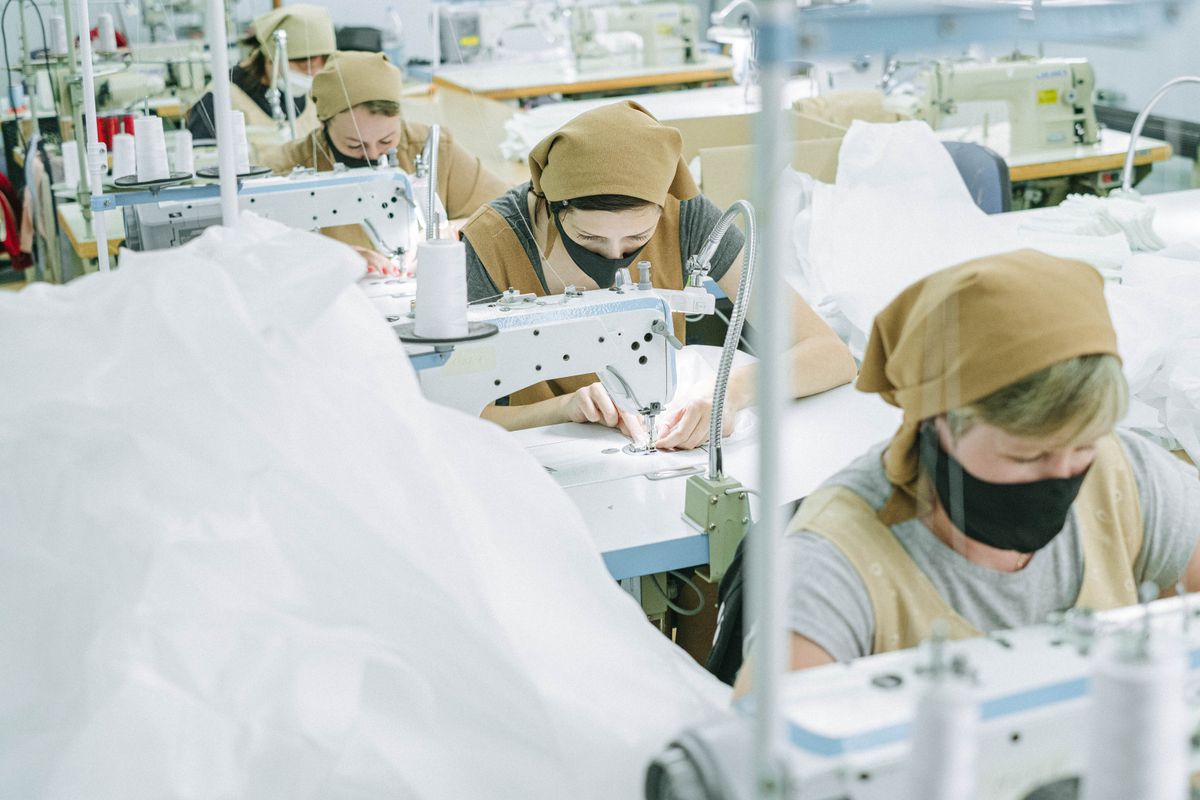
The proto's job is narrow: confirm the design can be built as intended. At this stage, substitute fabric is often used — the point is not how the garment looks, but whether the pattern geometry works.
For a structured coat, this means checking that the interlining zones are correctly placed, the canvas chest piece is seated without pull, the collar sits flat, and the shoulder structure reads correctly without forward rotation or twist. A proto that fails any of these is returned for revision before a single fitting is scheduled. Brands that rush past a bad proto pay for it in the fit stage — at 7–10 days and $600–$1,500 per additional round.
| Metric | Value | Source |
|---|---|---|
| Proto sample lead time | 7–14 days | BOMME Studio, Garment Sampling Process 2025 |
| Proto sample cost multiplier vs bulk FOB price | 2–3× bulk FOB | Visionise, Clothing Sample Types & Timelines 2025 |
| Fusible interlining bonding temperature — PA (Polyamide) adhesive | 140–160°C (±2°C tolerance) | Interlining Factory (Jiaxing Rainbow UBL), Complete Technical Guide to Interlining Fabrics 2025 |
| Fusible interlining bonding temperature — PE (Polyethylene) adhesive (heat-sensitive fabrics) | 110–130°C | Interlining Factory (Jiaxing Rainbow UBL), Complete Technical Guide to Interlining Fabrics 2025 |
| Polyester adhesive interlining wash resistance | Stable to 60°C machine wash | Interlining Factory (Jiaxing Rainbow UBL), Complete Technical Guide to Interlining Fabrics 2025 |
| Woven interlining weight range for structured outerwear | 40–160 gsm (woven); 80–300 gsm (needle-punch felt); 100–250 gsm (hair canvas) | Interlining Factory (Jiaxing Rainbow UBL), Complete Technical Guide to Interlining Fabrics 2025 |
| Double-dot adhesive coating weight for fusible interlining | 12–20 g/m² | Interlining Factory (Jiaxing Rainbow UBL), Complete Technical Guide to Interlining Fabrics 2025 |
Hair canvas (100–250 gsm) is the preferred choice for high-end tailored overcoats; fusible interlining is standard for contemporary and commercial coat production. Verify compatibility with the face fabric before sampling begins.
3. Fit Sample Evaluation: Bust, Sleeve Pitch, Armhole, and Writing Actionable Comments
Measurement deviation above 1 cm at any primary point indicates a pattern problem requiring redraft — not a revision comment.
The fit sample is the first time the garment is built in the intended fabric — and the first time construction decisions interact with the actual material's drape and weight. For a women's coat, the critical evaluation points are bust circumference (with coat-appropriate ease), back length, sleeve pitch, and armhole shape.
A deviation above 1 cm at any primary measurement point flags a pattern problem, not a sewing inconsistency. Feedback to the factory needs specific numbers and directions — "tighter" means nothing; "–1.5 cm from the armhole seam, maintaining the pitch angle" is actionable. For women's outerwear sampling and fit capability, the most important communication channel is a short video call with the pattern maker — a 15-minute call resolves what days of email cannot.
| Metric | Value | Source |
|---|---|---|
| Fit sample revision lead time per round | 7–10 days per revision | BOMME Studio, Garment Sampling Process 2025 |
| Expected number of revisions at the fit sample stage | 1–2 revisions | Visionise, Clothing Sample Types & Timelines 2025 |
| Measurement deviation requiring pattern adjustment (figure problem threshold) | More than 1 cm | Mueller & Sohn, Taking Measurements 2024 |
| Measurement deviation acceptable for minor correction without pattern redraft | Up to 0.5 cm | Mueller & Sohn, Taking Measurements 2024 |
| Standard armhole ease allowance for outerwear | ½″–1″ (1.25–2.5 cm) depending on fabric and sleeve design | SewGuide, Armscye & Armhole Measurement In Sewing |
| Sampling rounds required for complex structured outerwear to perfect fit and construction | 3–5 rounds | Adstronaut, Fashion Sampling Costs 2026 |
When providing fit comments via email, annotate photographs with measurement markers and direction arrows.
4. Lab Dip Approval: Delta E Tolerances, Metamerism, and the Colorway Lock
Specifying ΔE ≤ 1.0 under three illuminants is the entire color specification — everything else is guesswork.
Lab dip approval is where most brands lose time and incur avoidable cost. A traditional lab dip cycle averages 17 days and 2–4 physical iterations per color — each round adding $50–$150 in courier costs and weeks to the schedule. The root cause is imprecise specifications: when a brand submits only a Pantone reference and no ΔE tolerance, the factory interprets "close enough" differently at every iteration.
Specifying ΔE ≤ 1.0 tolerance — measured under D65, TL84, and Incandescent A — eliminates ambiguity and compresses approval to one or two rounds. Metamerism is the technical risk specific to coats: a color that matches in the showroom under TL84 can shift visibly under daylight or home lighting. For PP sample approval at a specialist outerwear factory, color sign-off and PP sign-off should be sequential, not simultaneous.
| Metric | Value | Source |
|---|---|---|
| Traditional lab dip approval cycle time (average per color) | 17 days per color | 3-Tree / ColordesQ, Fabric Lab Dip Process 2025 |
| Typical lab dip iterations per color in traditional process | 2–4 iterations per color | 3-Tree / ColordesQ, Fabric Lab Dip Process 2025 |
| Cost per physical lab dip round (including shipment) | $50–$150 per round | 3-Tree / ColordesQ, Fabric Lab Dip Process 2025 |
| ΔE tight commercially acceptable color match threshold | ΔE ≤ 1.0 (imperceptible to human eye) | Metro Dyeing, Understanding ΔE 2025 |
| ΔE threshold above which color difference is clearly noticeable | ΔE > 3.0 | Metro Dyeing, Understanding ΔE 2025 |
| ΔE drift threshold requiring lab dip re-mixing | ΔE > 1.5 | Ninghow, Lab Dip Approval Made Easy 2025 |
| Illuminants required for metamerism check | D65 (daylight), TL84/F11 (store lighting), Incandescent A (home lighting) | Fumao Fabric, How to Specify Delta E for Color Tolerance 2025 |
| Lab dip cycle time with digital color management | From 17 days to 5 days (12 days saved per color) | 3-Tree / ColordesQ, Fabric Lab Dip Process 2025 |
Digital color management platforms (X-Rite Pantone Textile Color Hub, ColordesQ) achieve 95% first-submission approval rates and reduce cycle time to 5 days — the most significant time savings available in the sampling process for multi-colorway coat lines.
5. PP Sample: The Production Contract — What It Must Match Before You Approve Bulk Cutting
The PP sample is the physical contract. Approving it from photographs is like signing a lease without reading it.
The PP sample is not a prototype. It is the legal definition of the bulk order. Unlike the fit sample — which may be made in substitute fabric — the PP must use the actual approved production fabric, the signed-off trims, the final labels, and the exact construction methods that will run in bulk. When both parties sign off, any deviation in the production run is challengeable against the PP sample.
Factories that understand this keep three copies: one for quality staff, one for the production floor, one for R&D. Brands that skip a PP review — or approve one from photographs rather than a physical piece in hand — waive their strongest recourse for quality disputes. The PP approval also marks the start of during-production inspection, triggered at 20–50% of production completion.
| Metric | Value | Source |
|---|---|---|
| PP sample lead time | 7–14 days (using actual production materials, trims, labels) | BOMME Studio, Garment Sampling Process 2025 |
| PP sample cost vs bulk FOB | At bulk FOB price (no premium unlike proto's 2–3×) | Visionise, Clothing Sample Types & Timelines 2025 |
| PP sample legal status upon sign-off | Legally binding production reference — any deviation in bulk is challengeable | Sofeast, What Is A PP Sample? 2025 |
| Golden sample copies maintained by well-run factory | 3 copies: quality staff, production line, R&D | Jing Sourcing, PP Samples 2025 |
| AQL major defect acceptance limit in standard apparel production | 2.5% major defects | QIMA, Acceptable Quality Limit (AQL) Guide 2025 |
| AQL minor defect acceptance limit | 4.0% minor defects | QIMA, Acceptable Quality Limit (AQL) Guide 2025 |
| During-production inspection trigger point after PP approval | At 20–50% production completion | QIMA, Initial Production Check (IPC) 2025 |
The PP sample approval marks the start of bulk cutting. Any unresolved changes requested after this point add lead time, cost, and rework risk. Treat PP sign-off with the same discipline as a purchase order signature.
6. Sampling Costs and the Economics of Revision Rounds
60% of all physical samples produced during development never reach production — a direct index of documentation quality.
Sampling costs for structured outerwear accumulate in a way that most small brand founders underestimate before their first production cycle. At $600–$1,500 per round for a complex coat, the math compounds quickly: 4 revision rounds plus courier shipping equals $2,800–$6,500 per style before a single bulk unit is ordered.
The clearest lever is documentation quality. Brands with a complete, accurate tech pack average 1.5 sample rounds; those with incomplete specs average 3.5. The $500–$2,000 investment in a professional tech pack saves $1,000–$4,000 in avoidable sampling costs per style — and compresses the development calendar by 2–6 weeks. Review sample cost refund policy and minimum order terms before comparing quotes across factories, since refund policies vary significantly and affect the true first-style cost.
Brands with a complete tech pack average 1.5 sampling rounds per style; those with incomplete documentation average 3.5 rounds. At $600–$1,500 per round for structured outerwear, that gap costs $1,200–$3,000 in avoidable sampling fees — before a single bulk unit is ordered. A $500 tech pack investment is the highest-return spend in coat development.
| Metric | Value | Source |
|---|---|---|
| First sample cost per round — structured outerwear | $600–$1,500 per round | Adstronaut, Fashion Sampling Costs 2026 |
| Total lifecycle sampling cost: structured outerwear | $3,000–$6,500 per style | Adstronaut, Fashion Sampling Costs 2026 |
| Physical samples produced during development that never reach production | 60% | Adstronaut, Fashion Sampling Costs 2026 |
| Sampling cost as share of small brand's seasonal budget | 40–60% | Adstronaut, Fashion Sampling Costs 2026 |
| Average sampling rounds: brands with complete tech pack | 1.5 rounds | Athleisure Basics, How to Calculate Garment Production Cost 2026 |
| Average sampling rounds: brands with incomplete documentation | 3.5 rounds | Athleisure Basics, How to Calculate Garment Production Cost 2026 |
| Sampling cost savings: complete vs incomplete tech pack | $1,000–$4,000+ per style | Athleisure Basics, How to Calculate Garment Production Cost 2026 |
| Sample courier shipping cost (China to US, per trip) | $60–$120 per shipment | Athleisure Basics, Clothing Production Cost Breakdown 2026 |
Sample cost refund policies vary by factory. Some BSCI-certified structured outerwear specialists refund the sample fee against the bulk order value, which effectively makes the first sample free at order confirmation.
7. Common Sampling Failures in Structured Outerwear — and the Comments That Prevent Repeat Mistakes
Structured coat sampling fails in predictable patterns. Interlining bubbles appear when fusing parameters — temperature, pressure, dwell time — are not documented and calibrated on the actual face fabric before bulk cutting. Shoulder pitch failures trace to ambiguous pattern comments ("shoulder looks off") rather than specific measurement corrections. Lab dip iterations extend because brands submit a Pantone chip without a ΔE tolerance or illuminant requirement.
PP sample deviations occur when factories use stand-in trims because approved trims have not yet arrived, and no one flags the substitution. The pattern across all these failures is the same: specification gaps that the factory fills with their own defaults. Brands working with a factory that holds quality certifications and third-party inspection acceptance have a defined escalation path when production deviations appear — but the most effective route is still preventing them through precise specification at every stage.
| Metric | Value | Source |
|---|---|---|
| Average production defect rate in monitored garment production lines | ~4% average defective (range 0.94–8.5%) | AI Publications, Proportion Defective Chart 2020 (most recent peer-reviewed) |
| Defect rate benchmark: premium quality factory vs low-cost regions | Under 3% (premium) vs ~12% (low-cost regions) | Athleisure Basics, Clothing Production Cost Breakdown 2026 |
| Faults caught in sampling that would have reached consumers | Up to 40% | Sansan Sports / Fabrikn, Sampling & Pre-Production Approval 2025 |
| Lab dip first-hit approval rate with digital color management | 95% approved on first submission (X-Rite Pantone Textile Color Hub) | X-Rite / Pantone, Textile Color Hub Press Release 2023 |
| Time-to-market improvement with digital color approval | 75% reduction in time to market | X-Rite / Pantone, Textile Color Hub Press Release 2023 |
| Shade-related return rate reduction with disciplined color approval | From 10% to 2% — 80% reduction in color complaints | Ninghow, Lab Dip Approval Made Easy 2025 |
| Sampling cost saving with digital-first approach vs full physical | $2,250–$4,900 saved per style (75% reduction) | Adstronaut, Fashion Sampling Costs 2026 |
The most effective prevention for all structural sampling failures is a single discipline: specify the number, not the direction. "–1.5 cm at the armhole pitch, measured from the shoulder seam" prevents a factory from interpreting "lower armhole" in six different ways.
Summary: Women's Coat Sampling by the Numbers
| Metric | Value | Source |
|---|---|---|
| Total sampling window: proto to PP approval | 4–8 weeks | BOMME Studio 2025 |
| Proto sample lead time | 7–14 days | BOMME Studio 2025 |
| Fit sample revision lead time per round | 7–10 days | BOMME Studio 2025 |
| PP sample lead time | 7–14 days (actual production materials) | BOMME Studio 2025 |
| Expected fit sample revisions at fit stage | 1–2 revisions | Visionise 2025 |
| Proto sample cost multiplier vs bulk FOB | 2–3× bulk FOB | Visionise 2025 |
| PP sample cost vs bulk FOB | At bulk FOB price (no premium) | Visionise 2025 |
| Sampling rounds: structured outerwear | 3–5 rounds | Adstronaut 2026 |
| First sample cost per round: structured outerwear | $600–$1,500 per round | Adstronaut 2026 |
| Total sampling lifecycle cost: structured outerwear | $3,000–$6,500 per style | Adstronaut 2026 |
| Samples never reaching production | 60% | Adstronaut 2026 |
| Measurement deviation: pattern redraft threshold | > 1 cm | Mueller & Sohn 2024 |
| Measurement deviation: minor correction (no redraft) | ≤ 0.5 cm | Mueller & Sohn 2024 |
| Traditional lab dip cycle time per color | 17 days average | 3-Tree / ColordesQ 2025 |
| Lab dip iterations per color (traditional process) | 2–4 per color | 3-Tree / ColordesQ 2025 |
| ΔE tight match threshold (imperceptible) | ΔE ≤ 1.0 | Metro Dyeing 2025 |
| ΔE re-mixing threshold | ΔE > 1.5 | Ninghow 2025 |
| PP sample legal status on sign-off | Legally binding production reference | Sofeast 2025 |
| Sampling cost savings: complete vs incomplete tech pack | $1,000–$4,000+ per style | Athleisure Basics 2026 |
| Faults caught in sampling that would have reached customers | Up to 40% | Sansan Sports 2025 |
Methodology and Sources
Data aggregated from garment development studios, fashion industry cost analysts, textile manufacturers, color science instrument companies, and China sourcing QA firms. Where primary sources were unavailable, the Tier 3-consensus standard was applied: the same statistic confirmed across 3+ independent sources. All Tier 3-consensus figures are noted where cited. No flagged or unverified statistics appear in Key Takeaways.
- BOMME Studio — Garment Sampling Process
- Visionise — Clothing Sample Types & Timelines Explained
- Adstronaut — Fashion Sampling Costs: Physical vs Digital Sampling
- Mueller & Sohn — Taking Measurements (pattern construction guide)
- 3-Tree / ColordesQ — Fabric Lab Dip Process
- Metro Dyeing — Understanding ΔE: The Science of Color Matching in Textile Dyeing
- Ninghow — Lab Dip Approval Made Easy: Color Control For Apparel Success
- X-Rite / Pantone — Textile Color Hub Press Release
- Fumao Fabric — How to Specify Delta E for Color Tolerance in Fabric Dyeing
- Interlining Factory (Jiaxing Rainbow UBL) — Complete Technical Guide to Interlining Fabrics
- QIMA — Acceptable Quality Limit (AQL) Guide
- QIMA — Initial Production Check (IPC)
- Sofeast — What Is A PP Sample?
- Jing Sourcing — PP Samples: Your Ticket to Product Perfection
- Athleisure Basics — How to Calculate Garment Production Cost: A 2026 Guide for Emerging Brands
- AI Publications — Proportion Defective Chart to Monitor Apparel Production Process (peer-reviewed, 2020 — most recent available)
- Ninghow Apparel — The 4 Stages of Sampling
- Shanghai Garment — Typical Lead Time 2025
Last updated: June 2026. Data reviewed quarterly; color science and measurement tolerance standards are reviewed annually.
R
Written by
Ray Wang
Women's outerwear manufacturing specialist with 13 years of experience producing wool, cashmere, and down coats for fashion brands across Europe and North America at JX Apparel Group in Jiaxing, China.
Related Insights
Production
Shearling Jacket Manufacturer for Small Brands (2026): 42+ Data Points on Sourcing, MOQ, and Construction
12 min readProduction
Cocoon Coat Manufacturer for Small Brands Statistics (2026): 40+ Data Points on Oversized Patterning, Grading, and Fabric Weight
14 min readProduction
Trench Coat Manufacturer for Small Brands Statistics (2026): 45+ Data Points on Gabardine Specification, Water-Repellency Testing, and MOQ
15 min readReady to Source?
Work with a Factory That Specialises in Premium Outerwear
20+ years of team experience in mid-to-high-end women's coats and jackets. Low MOQ from 200 pcs. Cashmere, wool, silk capabilities.
Get in Touch →