JX Apparel Group
Compliance
BSCI Certified Outerwear Factory (2026): 40+ Data Points on What the amfori Audit Actually Proves, How Grades Work, and Where It Stops
By Ray Wang·May 23, 2026·12 min read
An amfori BSCI audit is 81 questions across 13 performance areas, covering 67,000+ supplier sites and roughly 40,000 audits a year — and yet it is not a certification, it does not test a single chemical, and it cannot tell you whether the stitching on your wool coat will hold (amfori). Understanding exactly what BSCI proves and where it stops is the difference between a compliant outerwear program and a paper one.
Garments and textiles is one of amfori's two largest user sectors, with combined member turnover of EUR 1.6 trillion. Two structural changes redraw the 2026 picture for buyers: from 1 September 2024 amfori no longer accepts fully announced BSCI audits — every audit is now semi-announced or unannounced — and from 3 February 2026 amfori formally discontinued SA8000 recognition as a BSCI equivalent. A factory that previously satisfied amfori-member buyers with an SA8000 certificate alone now needs a BSCI audit on file.
Key Takeaways
- The amfori BSCI Code of Conduct is structured around 13 Performance Areas, each grounded in ILO conventions, OECD guidelines and the UN Guiding Principles (amfori).
- A full BSCI audit is 81 questions assessed via on-site observation, document review and worker interviews — each rated Yes / No / Partial / Not Applicable (amfori via Eurofins).
- Grade A (Very Good) = 86–100% — strong compliance with minimal follow-up; next full audit due in 2 years (amfori BSCI Audit Rating Guide).
- Grade C (Acceptable) = 51–70% — requires a corrective-action plan within 60 days and a follow-up audit within 2–12 months; the practical floor most EU/US outerwear buyers accept (amfori BSCI Audit Rating Guide).
- The full BSCI audit cycle is 2 years; follow-up audits in between cover only the performance areas needing new evidence (amfori).
- The full audit report is uploaded to the amfori Sustainability Platform within 10 business days of the audit — this is where buyers verify a certificate is genuine (amfori).
- The amfori Sustainability Platform maps 67,000+ supplier sites with roughly 40,000 audits conducted annually (amfori).
- amfori brings together 2,400+ importers, retailers and brand manufacturers across 52 countries with combined turnover above EUR 1.8 trillion (amfori).
- Social Accountability International's SA8000 — the closest peer to BSCI — protects 2.8 million workers across 5,000+ certified facilities globally (SAI).
- OEKO-TEX Standard 100 tests every component against more than 1,000 harmful substances — none of which BSCI assesses (OEKO-TEX).
- Since June 2022 U.S. CBP has reviewed 16,700+ shipments valued at almost USD 3.7 billion under the UFLPA; apparel, footwear and textiles is the #2 detained category after electronics (U.S. CBP).
- The Social & Labor Convergence Program reached 10,200+ Converged Assessment Framework assessments by 2024, covering 7.3 million workers — the emerging cross-program data layer above BSCI/WRAP/SMETA (SLCP).
1. What amfori BSCI Is — and the 13 Performance Areas an Audit Actually Covers
amfori BSCI is a social compliance programme run by the Brussels-based business association amfori. The distinction that matters: it is not a certification standard like SA8000 or WRAP — it is a continuous-improvement framework. A factory does not get certified; it is audited against the amfori BSCI Code of Conduct and receives a grade.
The Code is structured around 13 Performance Areas, each grounded in ILO conventions, OECD guidelines and the UN Guiding Principles. For an outerwear buyer that distinction matters: a BSCI report is a snapshot of social conditions on a single date, not a certificate of perpetual compliance. A factory like JX Apparel Group, maintaining BSCI buyer documentation, is committed to that framework, but a buyer should still understand the 13 areas before relying on the result. Visit our BSCI-audited outerwear factory in Jiaxing page for the current buyer-documentation process.
BSCI grades a factory across 13 performance areas; it does not certify it.
| Metric | Value | Source |
|---|---|---|
| Performance areas in the BSCI Code of Conduct | 13 | amfori, amfori BSCI |
| Questions in a full BSCI audit | 81 | amfori (via Eurofins explainer) |
| Possible answers per question | Yes / No / Partial / Not Applicable | amfori, amfori BSCI |
| amfori members worldwide | 2,400+ across 52 countries | amfori homepage |
| Combined member turnover | EUR 1.8 trillion+ | amfori homepage |
| Suppliers in the amfori network | 58,000+ across 120 sourcing countries | amfori homepage |
| Mapped sites on amfori Sustainability Platform | 67,000+ | amfori Sustainability Platform |
| Audits conducted annually | ≈40,000 | amfori Sustainability Platform |
2. How to Read a BSCI Audit Report: Grades A Through E, Validity, and Platform Verification
Every BSCI audit produces a single overall grade plus per-PA ratings. Grade A is awarded for 86–100% performance, B for 71–85%, C for 51–70%, D for 30–50% and E for 0–29%. The threshold a buyer should care about is the cut between B and C: grades A and B trigger the next full audit at the normal 2-year mark, while grades C, D and E force a follow-up audit within 2–12 months plus a 60-day corrective-action plan.
The other check a buyer should make is platform verification: full reports live on the amfori Sustainability Platform and are accessible to the supplier, the report-sponsor (RSP holder), and any amfori member linked to that supplier — uploaded within 10 business days of the audit. A scanned PDF emailed from a factory is not verification; the entry in the amfori platform is. Buyers can request the current report via our JX Apparel Group factory overview page.
| Metric | Value | Source |
|---|---|---|
| Grade A — Very Good | 86–100% (next full audit in 2 years) | amfori BSCI Audit Rating Guide |
| Grade B — Good | 71–85% (next full audit in 2 years) | amfori BSCI Audit Rating Guide |
| Grade C — Acceptable | 51–70% (60-day corrective plan + follow-up 2–12 mo) | amfori BSCI Audit Rating Guide |
| Grade D — Insufficient | 30–50% (60-day plan + monitored follow-up) | amfori BSCI Audit Rating Guide |
| Grade E — Unacceptable | 0–29% (follow-up audit within 2–12 mo) | amfori BSCI Audit Rating Guide |
| Full audit cycle length | 2 years | amfori — Audits |
| Report uploaded to platform within | 10 business days | amfori — Audits |
| Self-request audits via platform | Available from July 2025 | amfori Sustainability Platform |
3. What BSCI Proves (Labour, Hours, Wages, Safety) — and What It Does Not (Product, Chemicals, Animal Welfare)
BSCI is a social audit. Its 13 performance areas cover freedom of association, no discrimination, fair remuneration, decent working hours, occupational health and safety, no child labour, special protection for young workers, no precarious employment, no forced labour, environment (only at the level of waste, emissions and hazardous-substance handling, not chemical residues in product), ethical business behaviour, social management system, and workers' involvement and protection.
It does not test a single chemical in a finished coat — that is the domain of OEKO-TEX Standard 100, which screens against 1,000+ harmful substances. It does not verify animal welfare or fibre traceability — that lives in RWS, ZQ or SFA. And it says nothing about product quality, dimensional tolerances or seam strength — those belong to inline QC and third-party inspection. Treating BSCI as a comprehensive seal of approval is the most common buyer mistake to avoid.
A BSCI report tells you how a factory treats its workers. It does not tell you what your coat is made of.
| Metric | Value | Source |
|---|---|---|
| BSCI: chemical residues tested in finished product | 0 (not in scope) | amfori, amfori BSCI |
| OEKO-TEX Standard 100 substances tested | 1,000+ | OEKO-TEX Standard 100 |
| OEKO-TEX-certified companies in network | 35,000+ | OEKO-TEX Standard 100 |
| OEKO-TEX certificate validity | 1 year (vs. BSCI 2-year cycle) | OEKO-TEX Standard 100 |
| BSCI: animal welfare / fibre traceability | Not in scope (RWS, ZQ, SFA cover this) | amfori, amfori BSCI |
| BSCI: product quality / dimensional QC | Not in scope (third-party inspection) | amfori, amfori BSCI |
4. BSCI vs SA8000 vs WRAP vs SLCP: How the Major Social Schemes Differ
Buyers regularly confuse these schemes because they overlap heavily on labour standards. The clearest mental model: amfori BSCI and SLCP are programmes that produce shareable assessments; SA8000 and WRAP are certifications that produce a formal certificate.
SA8000 is the gold-standard certification — stricter, longer validity, run by Social Accountability International — protecting 2.8 million workers across 5,000+ facilities globally. WRAP is concentrated in apparel and footwear, especially for US brands, and retired its Platinum/Gold/Silver tiers on 1 March 2026 in favour of a single annual Certificate of Compliance. SLCP is the newer convergence layer designed to reduce duplicate audits — 10,200+ assessments completed by 2024, USD 39 million in audit-cost savings claimed for that year alone.
The key policy shift for buyers: from 3 February 2026 amfori discontinued recognition of SA8000 as a BSCI equivalent. A factory that previously satisfied amfori-member buyers with an SA8000 certificate now needs a BSCI audit as well — an important due-diligence step whether you are working under an OEM, ODM or private-label model. See our factory profile and audit history for the current stack.
| Metric | Value | Source |
|---|---|---|
| BSCI — programme type | Continuous-improvement audit (not a certification) | amfori, amfori BSCI |
| SA8000 — certified facilities | 5,000+ (2.8M workers) | Social Accountability International, SA8000 |
| WRAP — compliance principles | 12 (vs. BSCI's 13 PAs) | WRAP Compliance |
| WRAP — new structure (effective 1 Mar 2026) | Single annual Certificate of Compliance (Platinum/Gold/Silver retired) | Cosmo Sourcing — Vietnam Factory Audit Guide |
| SLCP — assessments completed | 10,200+ by 2024 | Social & Labor Convergence Program |
| SLCP — workers covered | 7.3 million | Social & Labor Convergence Program |
| SLCP — facilities using CAF | 14,400+ (17,800 adopters in 120+ countries) | Social & Labor Convergence Program |
| SA8000 recognised as BSCI equivalent | Discontinued 3 February 2026 | Testcoo, SA8000:2026 update |
5. Pairing BSCI With Quality and Chemical Audits: SGS, Bureau Veritas, Intertek, OEKO-TEX
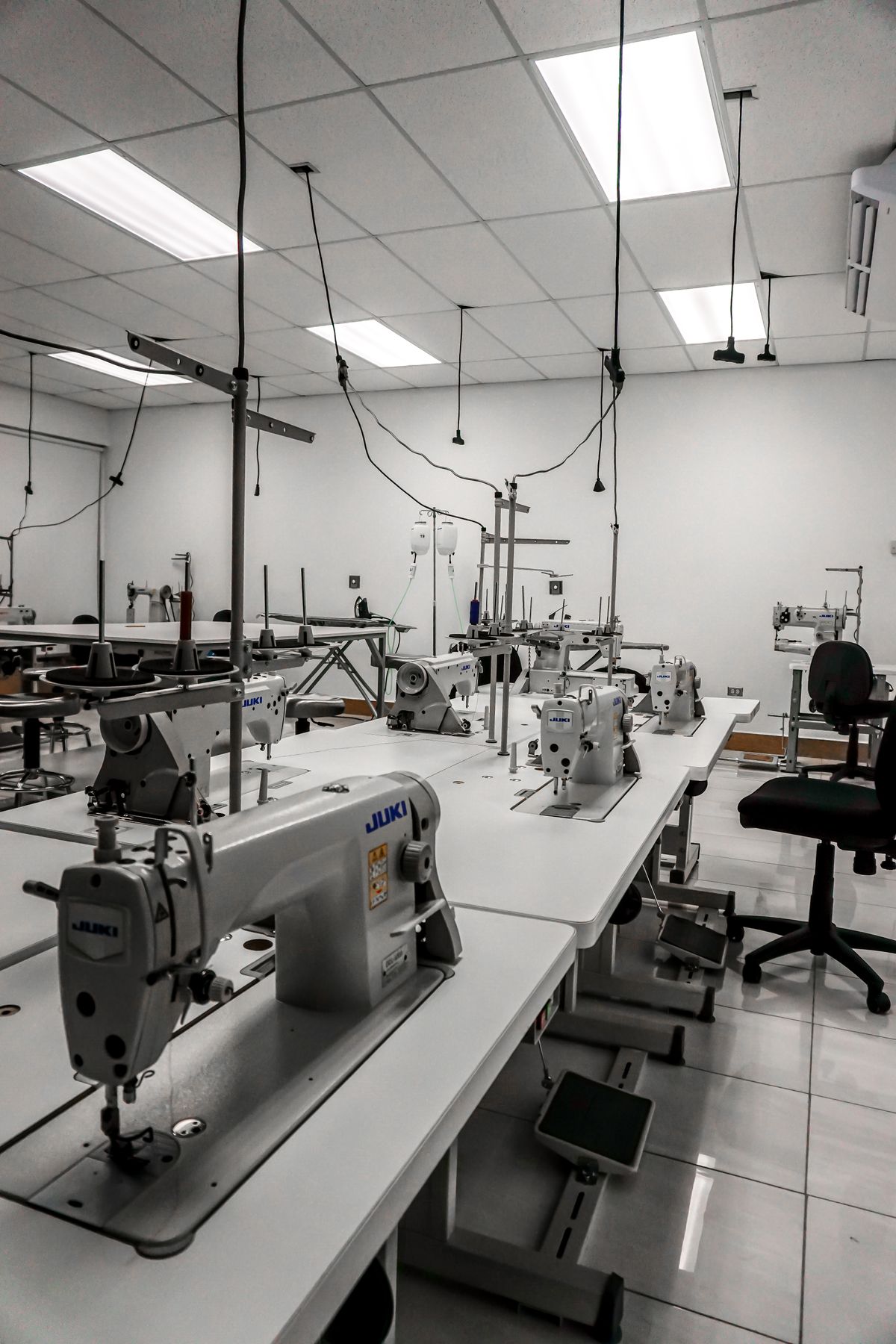
A complete outerwear compliance package is BSCI for labour, OEKO-TEX (or REACH SVHC testing) for chemicals, and a third-party inspection partner — usually SGS, Bureau Veritas or Intertek — for product quality.
The textile testing/inspection/certification market is concentrated: SGS holds roughly 21% of global TIC share, Intertek 18%, Bureau Veritas and TÜV SÜD a combined 15%. SGS performs more than 150,000 textile audits annually; Intertek conducts 500,000+ textile safety and compliance tests. Sustainable-testing demand has grown 41% from 2023 to 2025.
For an outerwear buyer, the practical sequence is: BSCI on file, OEKO-TEX (or REACH test report) on every fabric and trim package, then a final-AQL third-party inspection at shipment. Our five-stage inline QC and third-party inspection support is built around this sequence.
| Metric | Value | Source |
|---|---|---|
| SGS — global textile TIC market share | ≈21% | 360 Research Reports — Textile TIC Market |
| Intertek — global textile TIC share | ≈18% | 360 Research Reports — Textile TIC Market |
| Bureau Veritas + TÜV SÜD — combined share | ≈15% | 360 Research Reports — Textile TIC Market |
| SGS textile audits per year | 150,000+ | Testex — 2025 annual reports overview |
| Intertek textile tests per year | 500,000+ | Testex — 2025 annual reports overview |
| Bureau Veritas 2024 revenue | EUR 6.47 billion (+6.5% organic) | Testex — 2025 annual reports overview |
| Intertek 2024 revenue | GBP 3.43 billion (+4.3%) | Testex — 2025 annual reports overview |
| Sustainable-testing demand growth 2023–2025 | +41% | 360 Research Reports — Textile TIC Market |
6. Why EU and US Buyers Are Tightening the BSCI Floor in 2026
The regulatory backdrop is what is driving the shift. The EU's Corporate Sustainability Due Diligence Directive (CSDDD), after the Omnibus I Simplification Package approved in December 2025, applies only to brands with more than 5,000 employees and EUR 1.5B+ turnover, with first compliance in 2029 covering 2028 activities — but the supplier-side documentation requirements cascade down to smaller suppliers regardless. The CSRD covers brands above 1,000 employees and EUR 450M+ in turnover. Brands sourcing from China should also review broader EU product-safety compliance requirements that sit alongside CSDDD.
On the US side, UFLPA enforcement is intensifying: CBP detained 6,636 shipments in the first half of 2025 alone — already more than the 4,619 detained in all of 2024 — with 82.8% involving goods from China. Apparel, footwear and textiles is the #2 detained category. US buyers should factor this alongside broader landed-cost and tariff exposure on China-made coats.
The practical effect: large EU and US outerwear buyers increasingly require a BSCI grade C minimum from their Chinese suppliers, with grade A or B preferred, and unannounced auditing — exactly what amfori moved to as standard on 1 September 2024.
| Metric | Value | Source |
|---|---|---|
| CSDDD scope (post-Omnibus I, Dec 2025) | Brands >5,000 employees AND >EUR 1.5B turnover | Carbonfact — CSDDD for Apparel & Footwear |
| CSDDD transposition deadline | July 2027 (first compliance 2029 for FY 2028) | European Commission — Corporate Sustainability Due Diligence |
| CSRD scope (post-Omnibus I) | Brands >1,000 employees AND >EUR 450M turnover | Carbonfact — EU Omnibus I overview for fashion |
| UFLPA shipments detained — H1 2025 | 6,636 | Ropes & Gray — UFLPA enforcement stats |
| UFLPA detentions from China — H1 2025 | 82.8% of total | Ropes & Gray — UFLPA enforcement stats |
| Apparel/footwear/textiles UFLPA detentions — Aug 2025 | 56 shipments (#2 category) | U.S. CBP — UFLPA Statistics |
| UFLPA total reviewed since June 2022 | 16,700+ shipments / USD 3.7 billion | U.S. CBP — UFLPA Statistics |
| Fully announced BSCI audits accepted | Discontinued 1 September 2024 | amfori Insights — 2024 dashboards |
7. Vetting a BSCI-Certified Outerwear Factory: Common Buyer Mistakes and a 7-Step Checklist
Credible critique of BSCI is real and should inform how it is used. Human Rights Watch documented in 2023 that pre-announced audits allow factories to coach workers and stage conditions — a structural critique amfori partially addressed by ending fully announced audits on 1 September 2024. Clean Clothes Campaign's longstanding critique that BSCI does not publish audit reports is correct: full reports are visible only to amfori members linked to the supplier on the Sustainability Platform.
For a buyer, this means the practical work is not in trusting the BSCI logo — it is in verifying the report on the platform, reading the per-PA grades (not just the overall), checking that the certificate is current (a factory's 2-year cycle should not have lapsed), and pairing BSCI with chemical and quality audits. Contact the export team to request audit documentation for the current JX Apparel Group BSCI file and pair it with whatever third-party inspection partner your programme uses.
Don't trust the logo. Verify the report on the amfori platform, read the per-PA grades, and pair it with chemical and quality audits.
| Metric | Value | Source |
|---|---|---|
| 1. Verify report on amfori Sustainability Platform | Member-link required; PDF emailed by factory ≠ verification | amfori — Audits |
| 2. Confirm grade per PA, not just overall | Per-PA ratings A–E are in the report | amfori, amfori BSCI |
| 3. Confirm audit is within 2-year validity | Full audit cycle = 2 years | amfori — Audits |
| 4. Confirm audit type is semi/unannounced | Fully announced audits no longer issued post-1 Sep 2024 | amfori Insights 2024 dashboards |
| 5. Pair BSCI with OEKO-TEX or REACH test | BSCI tests 0 chemicals; OEKO-TEX tests 1,000+ | OEKO-TEX Standard 100 |
| 6. Plan third-party inspection at shipment | SGS / Intertek / Bureau Veritas — 21 / 18 / part-of-15% market share | 360 Research Reports — Textile TIC Market |
| 7. Watch for HRW-documented audit gaps | Cross-check with public records and labour-rights reporting | Human Rights Watch — Bangladesh: Social Audits Shortchange Workers |
Summary: BSCI and the Outerwear Compliance Stack by the Numbers
| Metric | Value | Source |
|---|---|---|
| BSCI Performance Areas in the Code of Conduct | 13 | amfori, amfori BSCI |
| Questions in a full BSCI audit | 81 | amfori (via Eurofins explainer) |
| BSCI grade A threshold | 86–100% | amfori BSCI Audit Rating Guide |
| BSCI grade C threshold (acceptable floor) | 51–70% | amfori BSCI Audit Rating Guide |
| Full audit cycle length | 2 years | amfori — Audits |
| Follow-up audit timing for Grade C–E | 2–12 months | amfori — Audits |
| Report upload to amfori platform | Within 10 business days | amfori — Audits |
| amfori members worldwide | 2,400+ across 52 countries | amfori homepage |
| Suppliers in amfori network | 58,000+ across 120 countries | amfori homepage |
| Sites mapped on amfori Sustainability Platform | 67,000+ | amfori Sustainability Platform |
| Annual audits via amfori system | ≈40,000 | amfori Sustainability Platform |
| Garments & textiles + general merchandise turnover | EUR 1.6 trillion combined | amfori, amfori BSCI |
| SA8000-certified facilities globally | 5,000+ (2.8M workers) | Social Accountability International, SA8000 |
| WRAP Principles | 12 | WRAP Compliance |
| WRAP structure change (2026) | Single annual Certificate of Compliance (effective 1 Mar 2026) | Cosmo Sourcing — Vietnam Factory Audit Guide |
| SLCP completed assessments (2024) | 10,200+ / 7.3M workers | Social & Labor Convergence Program |
| OEKO-TEX Standard 100 substances tested | 1,000+ | OEKO-TEX Standard 100 |
| SGS global textile TIC market share | ≈21% | 360 Research Reports — Textile TIC Market |
| UFLPA shipments reviewed since June 2022 | 16,700+ / USD 3.7 billion | U.S. CBP, UFLPA Statistics |
| SA8000 recognised as BSCI equivalent | Discontinued 3 February 2026 | Testcoo, SA8000:2026 update |
Methodology and Sources
Data was aggregated from primary sources: amfori (BSCI Code of Conduct, Audit Rating Guide, Sustainability Platform, Audits help center), Social Accountability International (SA8000), WRAP Compliance, the Social & Labor Convergence Program, OEKO-TEX, the European Commission's CSDDD page, U.S. Customs and Border Protection's UFLPA statistics, and Ropes & Gray's UFLPA enforcement summary. Third-party inspection market data is taken from 360 Research Reports' Textile TIC Market 2025 report and the Testex consolidation of SGS, Bureau Veritas and Intertek 2025 annual reports. Critique of social-audit limitations draws on Human Rights Watch (2023) and Clean Clothes Campaign's published critical perspective.
- amfori, amfori BSCI
- amfori — Audits help topic
- amfori Sustainability Platform
- amfori BSCI Audit Rating Guide (2025)
- Social Accountability International — SA8000
- Social & Labor Convergence Program — Ten Years of SLCP
- WRAP Compliance
- OEKO-TEX Standard 100
- European Commission — Corporate Sustainability Due Diligence
- U.S. CBP — UFLPA Statistics
- Ropes & Gray — Updated UFLPA enforcement stats
- 360 Research Reports — Textile TIC Market 2025
- Human Rights Watch — Bangladesh: Social Audits Shortchange Workers (2023)
Last updated: May 2026. This page is updated quarterly to reflect new amfori platform statistics, UFLPA enforcement data, and CSDDD scope changes.
R
Written by
Ray Wang
Women's outerwear manufacturing specialist with 13 years of experience producing wool, cashmere, and down coats for fashion brands across Europe and North America at JX Apparel Group in Jiaxing, China.
Related Insights
Compliance
Traceable Cashmere and Wool Sourcing Statistics (2026): 50+ Data Points on Tier Mapping, Certification Chain of Custody, and Fiber-Origin Verification
20 min readCompliance
EU Unsold Apparel Destruction Ban Statistics (2026): 45+ Data Points on Who It Binds, Disclosure Duties, and What Your China Coat Factory Must Document
15 min readCompliance
EU PPWR Packaging Compliance Statistics (2026): 40+ Data Points on Deadlines, Recycled Content, and What China Coat Factories Must Change
12 min readReady to Source?
Work with a Factory That Specialises in Premium Outerwear
20+ years of team experience in mid-to-high-end women's coats and jackets. Low MOQ from 200 pcs. Cashmere, wool, silk capabilities.
Get in Touch →